-Wir sein pettler. Hoc est verum.--"We are beggars. This is true."--Martin Luther-

_______________________________________________
[ Home ] [ Originals ] [ Words of Ones Wiser ] [ Odds and Ends ]
Showing posts with label Third Use of the Law. Show all posts

Wednesday, December 17, 2008

Lutheran Quote of the Day: Malysz on the Primal Nature of the Command

"What is significant about Adam is that he alone becomes the locus of God's self-sharing. In Adam God reveals himself as self-giving, as love. Through creation, he who already perfectly and sufficiently affirms otherness within himself--as Father, Son and Holy Spirit-- freely reaches out to another. On other words, man is the only creature willed by God for its own sake. Such is the nature of love. It affirms another not because of a vested interest, but freely and disinterestedly, for the other's sake. It finds the other beautiful and interesting.

"God's love, as it finds beauty and a source of interest in the other, truly creates the other to be beautiful and interesting. Thus, surveying his creative work, God was able to conclude approvingly that "it was very good" (Gn 1:31). The divine self-sharing manifests itself, in the first place, in the act of creation itself. But it goes much further. Man receives God's blessing, as he it told to "be fruitful and increase in number." All that God has created is now entrusted to him to rule over and to subdue (Gn 1:28). What this means is that creation is God's gift to be used in a meaningful and responsible way. Finally, God shares with man his own being. The latter not only has a direct and personal experience of his Creator, but is himself created to reflect the being of God.

"Man is created with a capacity to love and to reciprocate love. Like God he has the ability to go beyond himself. In the same way that God affirms otherness within himself, man, too, is made to affirm another, so that the two "will become one flesh" (Gn 2:24). Further he is endowed with the capacity to affirm creation--it finds its meaning in his responsible and God-like stewardship. As one commentator put it, "while [man] is not divine, his very existence bears witness to the activity of God in the life of the world." In other words, just as God finds Adam and Eve worthwhile and interesting in and of themselves, humans, likewise, are to find God's gift of creation worthwhile in and of itself. Creation is not to be abused. Humans are created to love God, their fellow man, and God’s gift of creation. By definition, they are social and vocational beings, relating to others in such a way as to further their good through God appointed means. In so doing, they surrender their being in all its individualism only to gain it back, in, with and through the being of another. Only by receiving and giving can they realize their humanity. Only thus can they be human beings.

"It has already been indicated that love consists in self-giving. Naturally there can be no love under coercion. Thus with its origin in the divine love, human existence is one of freedom. God did not create automatons but beings that were beautiful, interesting and worthwhile for their own sake—individuals with the capacity, of their own free will, to reflect the love received. A loving relationship by nature implies an option for un-love. Love as self-giving implies the possibility of rejection. It is in this context of what love is that the presence in the garden of the tree of knowledge of good and evil finds its purpose. To Adam and Eve was entrusted all that God had created with the exception of one tree, of which they were expressly forbidden to eat. In negative terms, the tree presents itself as an alternative to God's love; it makes the possibility of choosing un-love, or self-love, a real one. In positive terms, it underscores the free and self-giving character of the divine-human relationship, pointing to the centrality of love in the constitution of man. From man's perspective, it makes love possible. Finally, it points to the fundamental significance of trust as an inseparable aspect of love. Adam and Eve knew their creator intimately in his self-sharing. All they were and all that they had came from him. It would seem there surely was a significant basis for trust. And yet, incomprehensibly but in how familiar a way, they gave credence to the serpent's deceitful promise.

"The fall is often portrayed as a transgression of what seemed to be an otherwise arbitrary command. We have already demonstrated that the command was far from arbitrary. Neither was it meant to stress the importance of divinely established order, as if God's self-giving were a mere show. The command was not there to put man in place and show him who really was in charge. On the contrary, it was there to complete his humanness in its capacity for love and freedom."

-Piotr Malysz, “Third Use of the Law in Light of Creation and the Fall,” Logia 11, no. 3 (2002), 13.

Monday, December 15, 2008

Lutheran Quote of the Day: David Scaer on the Law

This is an extended quote from an older article by David Scaer. I think it expresses well some of my own thoughts on the topic. Namely is the topic of the spirit and the flesh, new man and old man. Forde does not address this issue at all, but this is really how the Christian's interaction with the law is presented in Scripture, especially in Paul (Cf. Rom. 7). The fact that the Christian, at one and the same time, both delights in and hates the law does not mean that man himself is the arbiter of how he reacts to the law. This is what Forde was most concerned about, that is, that man would put himself above the law, and thus dispose of it with either his thinking or actions; it would be a premature translation into the eschaton. An understanding of flesh and spirit, and with this the third use of the law, does not imply that man's positive disposition to the law is something that is determined by something "inside" of man, rather the disposition of the spirit, and the third use is clearly depicted as the work of God. If anything, Paul's depiction of the spirit and the flesh in Romans 7 shows how little he himself had over his interaction with the law, but at the same time, Paul also acknowledges that the Christian is critically engaged in and personally aware of how the Spirit is working himself out in our spirit. With Forde's desire to make it clear that man had no role in translating himself into the new age, he also disposed of man himself and the dynamic and very personal experience of what it means to be a Christian and to be confronted with God's Word. His interpretation of the third use of the law is telling in this regard. Gerhard Forde's most vocal complaint against the third use is the idea that the Christian can somehow use the law in a third way. This, though, is clearly a misunderstanding of the third use of the law. Article VI, of the Formula of Concord makes it clear that it is not man who uses the law in a third way, but rather the Holy Spirit (SD VI, 3; 12). It is the Holy Spirit that leads and instructs and guides. All other mention of teaching and instruction in Article VI is clearly shown as not pertaining to the third use of the law (SD VI, 9; 20; 21; 24. See my post on The Third Use of the Law).

III.

"The Formula, in presenting the Lutheran position on the Third Use of the Law, uses Biblical references which refer to the Scriptures in their totality and not only those passages speaking specifically about the Law. Both Psalm 1 (SD VI, 4) and 2 Timothy 3:15-17 (SD VI, 14) are used to demonstrate the Law's validity in the life of the Christian, though both passages refer to the Scriptures in their totality, not simply to the written Law. Psalm 1 speaks about the man who delights in the Books of Moses and the 2 Timothy 3:15-17 passages speaks about the total inspiration of the Scripture and not just the Gospel. Just as Lutherans see the entire Scripture as inspired, so they see the entire Scriptural message, both Law and Gospel, as applicable to the life of the Christian. The Formula sees in 2 Timothy 3:15-17 a direct Biblical command to apply the Law in the life of the Christian (SD V I, 14). Underlying the concept that the Law is made applicable in the life of the Christian through the Scriptures is the Lutheran understanding that the Scriptures in all its parts, both Law and Gospel, are inspired and that these Scriptures are directed to man in the state of sin. The Scriptures are God's written word, necessitated by the fall into sin and directed to man in this fallen condition. Natural Law, sin, and Scriptural inspiration are related to each other.

"Man by the fall into sin was no longer capable of properly comprehending the Law as it originally was part of creation. He followed after that Law, but he fulfilled its requirements only inadequately at best and in every case the Law became his accuser. As a religiously created being, man is compelled by his inherent religious nature to search after God, but these searches are doomed to failure (Apol. IV, 22-25, 40). God through His mercy sent the prophets and later the apostles to proclaim salvation in Jesus Christ. But before the proclamation of salvation could be made, the Law as first found in nature had to be restated in such a way that man in his perverted state could fully comprehend what God had always been setting forth in the natural Law. Both the prophets and the apostles redirected the Law specifically against man's unregenerate nature. They came first to proclaim the Law as a mirror of man's sins, i.e., its second use. Though God condemns through the Law, His proclamation of the Law through His prophets and apostles belongs to God's overall plan of mercy since man by the Law is properly prepared for the Gospel. The Spirit's inspiration of the prophets and apostles embraces not only the words of the .Gospel but also of the Law. The Formula makes no qualitative difference between the Spirit's origination of the Gospel and that of the Law. Both the Law and the Gospel proceed from the Spirit's inner being. Both are His products.

"The person who claims the direct guidance of the Holy Spirit and rejects the Law as revealed in the prophets and the apostles is, in fact, rejecting the Holy Spirit by rejecting His work. Whoever claims a working of the Spirit for his life apart from the prophets and apostles is a fanatic (SD XII, 30). The Holy Spirit has given both the Law and the Gospel and He is responsible for their inscripturation. The Law is valid in the life of the Christian if for no other reason than that it originates with the Spirit and He has caused it to be written in the Holy Scriptures. There are, of course, other reasons for the Law's validity in the life of the Christian. Nevertheless, the Lutherans saw the Law as part and parcel of the special divine revelation. Those who rejected the Law did not only have a faulty concept of the Law itself but of divine revelation and of the Scriptures themselves. Also connected with the concept of the Third Use of the Law was the Lutheran anthropology, the doctrine of man.

IV.

"The Formula reflected the Lutheran view of man as living under the Law in four different conditions: the original created state of moral innocence, the fallen state of sin, the state of regeneration, and the final state of resurrection. The Law in its third function is directed to man in the state of regeneration. Seeing man in these four different phases is essential for a fuller understanding of the Lutheran view of the Law and particularly its Third Use. The Lutheran view dismisses the idea that the Law undergoes any change as it is the expression of God's immutable will (FC SD VI, 15). The four different situations are accounted for by man's differing relationships to God and thus also to the Law. Man, as he is a sinner. can only envisage the Law with prohibitions and penalties as a negative intrusion into his life. It is difficult for man to imagine the original state of moral innocence in which he found positive direction for his life in the Law. In this original condition he needed neither prophet nor Scripture since man's communion with God's creation was itself participation in God's revelation. In the sinless condition man viewed nature and God's revelation as one entity. No special revelation beyond nature was needed. Man in moral innocence needed no Law as a curb for the gross manifestations of evil or for a reflection of his own sin. He needed no special direction of the Law as nature provided a constant, regular communication of the Law. Only in the fallen state is the original positive function of the Law replaced by negative prohibition. Law, understood originally as a description of man's positive relationships to God, to his fellow men, and to his environment becomes with the entrance of sin a negative description of man's broken relationships to God, his fellow men, and his environment. In the first condition, the indicative was merged with the imperative. The Law served as a description of what man was and what he was to do and what he, indeed, could do. There was no tension between what man did and what man could, must, and should do. Now in the state of sin what man must do and should do is not what he can do and does do. The Law becomes a compelling and restraining force against man's rebellious nature. What man once did naturally he is now forced to do against his will. The unregenerate man hates the performance of the Law with an intensity comparable to the first man's love for its performance. The sinner cannot remain morally neutral to the Law. He performs the Law which he hates and he knows that failure to perform its requirements brings penalties. Where he fulfills the Law, he is goaded by the promise of rewards and threats of its punishments. The Law makes the sinner's life miserable (SD VI, 19).

"When the sinner becomes a Christian, the Law begins to take on a new, different character for him. His new condition as a Christian means a new relationship with God and His Law. The Law in this Third Use is addressed to the sinner who has become a Christian but still remains in part under the control of sin (SD VI, 9). Understanding the Law in this Third Use is predicated on understanding the Lutheran view of the regenerate Christian.

"Essential to Lutheran anthropology is the internal strife within the Christian. He is tom between that part of him which wants to obey God's will and the part that feels more comfortable with the older ways of sin. Though this internal struggle is never over in this life, the promise of victory is assured in the resurrection. Several terms express these two opposing forces within the Christian. The part belonging to God is designated as the inner man, the Spirit's temple, and the regenerated man, the man who has been born again (FC SD VI, 5). The part which resists God is designated as the old Adam, the flesh, and in other Lutheran writings the old man. The Law of God remains one and immutable, but as it approaches the Christian, its positive directions apply to the converted part and its negative prohibitions with the threats of punishments are directed to the unregenerated condition.

"The Christian only so far as he is regenerated is free from the threats and curses of the Law (SD VI, 23) and he recognizes this Law as God's will for his life (SD VI, 12). The Formula uses picturesque language in describing the Christian's response to the Law. In this renewed condition he "does everything from a free and merry spirit" (SD VI, 17). Such good works are motivated by the Holy Spirit and flow from faith, but they are all in accordance with the Law, which is also the Spirit's product (SD VI, 12). Works flow from faith as water comes from a spring, but these works flow down channels established by the Law. This positive direction of the Law without prohibition or fear of punishment is what is essentially meant by the Third Use of the Law.

"Law as a positive direction in the life of the Christian is both a restatement of the original paradisical condition and a preview of the future state of glorification. In Paradise man knew the Law of God perfectly and rejoiced in it. Also in the final state of glorification man will not need or hear the negative aspects of the Law. So even now the regenerate man hears the Law of God, rejoices in it with his inner being, and performs it without thought. of reward. His only motivation is that he wants to please God.

"Law understood in this Third Sense as positive direction and guidance in the life of the Christian presupposes the Gospel. In each of its uses the Law is both didactic and imperative. It is not constructed to change man from a sinner to a saint and cannot effect regeneration. The Spirit's working through the Gospel is the cause of regeneration. But the Gospel presupposes the Law. just as the Law in the life of the Christian presupposes the Gospel. The Gospel is the proclamation that Jesus has fulfilled the Law's demands and suffered its penalties in man's stead. This message alone effects regeneration. The Law is the skeleton on which the life and death of Jesus is sketched out. The skeleton of the Law as it is framed in the Gospel message comes to the sinner having its structures completely filled out by Jesus. The Law's negative demands have been satisfied in Jesus so that its force becomes positive in the life of a person who has faith in Jesus. The Law's unfilled requirements have been fulfilled in Jesus. Christ has divested the Law of its negative requirements and He presents it to Christians as positive direction.

"But the Law which comes as positive direction to the regenerate part of the Christian also comes with its negative prohibition to the Old Adam (FC SD VI, 17, 18, 19). Part of the Christian is never converted. He resists believing that God has fulfilled the Law in Jesus Christ. The old man left unchecked would eventually bring man to final ruin and destruction According to Lutheran theology the unregenerate self must be forced and coerced with threats of the Law. The unregenerate part of a Christian is on the same level as the unconverted who "are driven and coerced into obedience by the threats of the law" (FC SD VI, 19). Not only does he fight against fulfilling God's Law, but when he does finally comply with the divine prohibitions in an external sense he becomes a hypocrite as he thinks he has fulfilled God's requirements and earned for himself salvation (FC SD VI, 21). To keep the unregenerate part of man under control, the Christian pastor must preach the negative aspects of the Law. Such works coerced by the preaching of the Law to unregenerated man, even if he is a Christian, have no validity before God for salvation. But the Christian, so far as he is regenerate, performs works from faith which are acceptable to God. These conform to the Law and God finds these acceptable. Though such works are always imperfect, they are acceptable to God because they me performed from faith which is centered in Christ Jesus and not from threats of the Law (FC SD VI, 23).

"It is the preaching of the Law and not the Gospel which alerts the Christian to the tension within himself. The same Law which is an expression of God's will in the life of the Christian remains a severe condemnation on his unregenerate nature. This tension, a dualism within the Christian, finds its real cause not in the Law but within the Christian himself. The work of the new man committed to Christ is countered by the old man who only gives up the struggle at death. Underlying the Lutheran concept of the old man is the Lutheran doctrine of original sin. The man who is totally unregenerate is brought struggling and kicking to faith. When a new life has been created, he continues to struggle, kick, and fight against God. The old man is not to be handled in a gentle and kindly way and then treated to the good news of salvation, but he is to be forced and threatened by the Law. The Formula puts it strongly (SD VI, 24):
For the Old Adam, like an unmanageable and recalcitrant donkey, is still a part of them and must be coerced into the obedience of Christ, not only with the instruction, admonition, urging and threatening of the law, but frequently also with the club of punishment and miseries, until the flesh of sin is put off entirely and man is completely renewed in the resurrection.
"In this life there is no hope for an end to the conflict. The Christian can revert to hypocrisy by believing that he is by himself fulfilling the Law perfectly or he can abandon the Law and become a libertine. But then he is no Christian. The hope for fulfillment in the Christian is not in this life but in the resurrection. Then he will need the preaching of neither the Law nor the Gospel, for he will be in God's presence. In heaven, the Third Use of the Law will be perfectly realized. There Christians "will do His will spontaneously without coercion, unhindered, perfectly, completely, and with sheer joy, and will rejoice therein forever" (FC SD VI, 25). Even in the final condition, it is not the nature of the Law that has changed but rather that man has become totally regenerated."

- David Scaer, “Formula of Concord Article VI. The Third Use of the Law,” Concordia Theological Quarterly 42, no. 2 (1978), 149-154.

Friday, December 12, 2008

Law, Gospel, and Eschatology in Gerhard Forde

Gerhard Forde's understanding of law and gospel is partly determined terminologically, partly eschatologically. I've been pouring over what Forde has written and I must admit that much of what he says is highly convoluted and abstract. Many of his distinctions seem arbitrary at best, though, overall, they express many of his broader concerns of how man lives under the gospel and how man lives under the law.

First off, we should address what Forde sees as the content of the will of God. It might be said that Forde didn't see the "content" in a quantitative sense but rather in a qualitative sense. He was wary of seeing the will of God as an eternal set of prescriptions. "At no time, according to Luther, does man possess full knowledge of the divine will, but only a knowledge of the law appropriate to his actual historical situation. This is true both of man in his original state and in his fallen state." (The Law-Gospel Debate (Minneapolis, Minn: Augsburg Publishing House, 1969), 176.) While this may be true for man who is perfectly righteous, I don't feel this is beneficial understanding of the content in this fallen age. As Paul Althaus makes clear, man as he exists in a paradisical state fulfills God's will in an infinite number of ways; but man in his fallen state is continually thinking up, and acting out new ways of blaspheming God's name. The reality of this, it might be said, is the reason for the need of a law that is explicated such as it is in Scripture. Forde writes: "The entire law is summed up in the First Commandment, which demands a qualitative subjection of man to God in faith and love. No quantitative measurable limit can be set for the fulfillment of such a law." (Law-Gospel, 187) As far as this might be true, this does not mean that an explicated law is not still as validly God's eternal divine will as an ethic summed up under the First Commandment. I will go out on a limb here and say that stealing will never be part of God's divine will. Therefore, and this is what to a large extent Article VI of the Formula of Concord is concerned with, man in his fallen state, with his fallen heart and fallen mind, should apply himself to God's Word where he will find the definite shape of God's will for him. Under Forde, this begins to be more subjective.

For Forde, this content of God's will, whatever it may be, is not yet law. God's will only becomes law when it confronts sinful man. This is where terminological considerations come into play. For Forde, "law" may not even need any true content, rather, "Law is anything which frightens and accuses "the conscience." The bolt of lightening, the rustling of a dry leaf on a dark night, the decalogue, the "natural law" of the philosopher, or even (or perhaps most particularly) the preaching of the cross itself-- all or any of these can and do become the voice of the law." (Law-Gospel, 177) The reason for this is that Forde wanted to keep the term "law" with a completely pregnant definition as that which is contrasted with the "gospel." This in itself is not a problem. Althaus makes a fairly convincing case that the New Testament itself engages in making terminological distinctions between "law" and what the law demands, that is, its content. (Paul Althaus, The Divine Command: A New Perspective on Law and Gospel, trans. Franklin Sherman (Philadelphia: Fortress Press, 1966), 3-7.) The problem with Forde is that his desire to keep a purely existential understanding of law is not coupled with an understanding of how God's will has a positive impact on the Christian in the outward expression of God's work of sanctification. To understand this we need to move from terminological to eschatological considerations.

Gerhard Forde places the law-gospel dialectic into an eschatological, before-and-after scheme. Now, this is not incorrect as far as how he defines law. The law, as "that which accuses sinners," is of temporal validity. Paul's existential depiction of the law and gospel is a reflection of this. The problem for Forde comes in in how these "two ages" relate and come about in the lives of believers. This is all closely tied to his understanding of sanctification. Forde liked to see things in wholes: either law or gospel; total judgement or total grace; this age or the next; death or resurrection; indicative or imperative; nothing or all; law (existentially understood) or fulfillment. For Forde things don't come in "parts." Let's hear some examples of this:

"From this point of view the way of the sinner in sanctification, if it is a movement at all, is a movement from nothing to all, from that which one has and is in oneself to that which one has and is in Christ. Such a movement can never be completed this side of the grave. Nor could it be a continuous movement through increasing degrees of approximation. Rather each moment, each encounter with the shock of divine holiness, could only be at once both beginning and end, start and finish." (“Eleventh Locus: The Christian Life,” In Christian Dogmatics, Vol. 2, ed. Carl E. Braaten and Robert W. Jenson, 391-470 (Philadelphia: Fortress Press, 1984), 431.)

"There is no “system” as such which can distinguish between the ages or can provide a continuous transition from this age to the next. Only the death and resurrection of Christ, the act of judgment and grace, is "the way."" (Law-Gospel, 223)

"In the church the believer comes to understand his existence in terms of two ontological determinations of his being, being “in Adam” and being “in Christ.” This corresponds exactly, of course, to the dialectic of the two ages." (Law-Gospel, 225)

"The progress for Luther has in mind is not our movement toward the goal but the goal's movement in on us. Imputed righteousness is eschatological in character; a battle is joined in which the totus iustus moves against the totus peccator." (The Christian Life, 435)

"The decalogue remains eternally in the sense that the reality demanded remains, but not as law. Here the distinction is between reality (res) and law, but not between the essence of law and the office of law. The term “law” applies only to the “office,” and not to the res." (Law-Gospel, 184)

For Forde, it is either law in the old age or fulfillment in Christ in the new age. The problem with this is that this is not reflective of how life actually works. By this, I don't only mean that this is not how we perceive it working but also how it actually works. Forde continually asserted that the new life was a death and resurrection. The problem I see in Forde is in his depiction of how this "reanimation" takes shape.

"Thinking theologically about the dialectic involves the fact that this act is at once total judgment and total grace. The fact that it is total judgment means that there can be no attempts on man's part to translate himself prematurely into the new age either by his action or by his thinking. Man's acting and thinking in this life remain and acting and thinking in this age, under the eschatological limit. The fact that it is also total grace means that man can be content to allow his acting and thinking to remain as it is, totally in this age; he can trust in Christ entirely for the gift of the new age." (Law-Gospel, 223-224)

Forde believes that "the eschatological possibility is made a present possibility only through faith in Christ." (Law-Gospel, 185) Because of this, acting and thinking on the Christian's part is and remains an acting and thinking in this age. This places into question how the Christian plays any role in participating in the new age. And consequently what role the law (understood as to its content) plays in the life of the Christian qua Christian. Forde writes:

"Law cannot be reintroduced after the end, for the end means perfect fulfillment. A perfect lover would not need laws about what to do. A perfect Christian would not need to be told what was right or wrong. One must hold out for that vision lest law conquer all. The day when all will be “written on our hearts” is the center of the biblical promise." (The Christian Life, 449-450)

It should be noted that by "end" Forde does not mean necessarily the end of the age, he means, including this, the new age which comes even "now." If it is the new age then it comes completely; there can be no "partly new age/partly old age." It is for this reason that Forde was so skeptical of any attempt at "redeeming" the law in this age; if we are dealing with it with our thinking and action then we are dealing with it in this age, if it is the new age, it is simply fulfilled. This is reflected in how Forde saw sanctification, as sanctification would obviously be participating in the new age. We read:

"There is no calculation, no wondering about progress, morality or virtue. There is just the doing of it, and then it is completely forgotten. The right hand doesn’t know what the left is doing. Good works in God’s eyes are quite likely to be all those things we have forgotten! True sanctification is God’s secret." (“A Lutheran View of Sanctification.” in Christian Spirituality: Five Views of Sanctification, ed. Donald L. Alexander (Downers Grove, IL: IVP, 1988), 30.)

Any of our own conscious attempts at bringing about sanctification would be a "false eschatology," as Forde would call it. It would be an attempt by our own powers to bring about something that simply happens by grace. Therefore one just preaches law and gospel, bringing death and new life, and we just sit back and "trust in Christ entirely for the gift of the new age." This is not only an incorrect understanding of sanctification but it is also an incorrect understanding of how God's will confronts us. In fact, it completely dissolves any idea that God's will confronts us in the new age because it is either law or reality (res), fulfilled. It is a confusion of indicative and imperative (See my post: The Word, Communication, and Sanctification). By making the new age and sanctification completely indicative, one does not then understand the communicative basis of our existence as being creatures before our Creator. The will of God always stands as an "other." Not that we in a paradisical state will not have the same will as God, rather, God's Word is always something that needs to be conformed to in faith; it is a matter of faith. Paul Althaus writes:
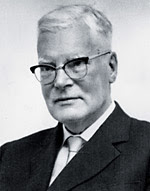
""Command": this implies that another will confronts me, which puts my own will under claim. There is not as yet any opposition between the two, but there clearly is a duality. Unity between God's will and my own is something that has to be realized, over and again; it is not presupposed. The command is a word that stands over me, a word spoken to me. My situation, therefore, is that of one who has to ask, who has to listen, for a word which I myself cannot speak. The fact that God's will confronts us as command is not a condition that arises through sin, or on account of sin; it is an ordinance of the Creator. For God is my Lord. What exists "in the beginning," in the primal state [Urstand], is not a mystical oneness with God, nor an identity of will, but rather a duality: a duality, however, that in every moment is in the process of becoming a unity. But this "becoming a unity" takes place only in obedience. The command does not originate after the fall; it exists already before the fall." (The Divine Command, 9-10)

This does not mean that our existence before God has an ethical basis, but rather it primarily has its basis in faith; it a question of whether or not I will trust God's Word in faith, or whether I will reject that Word. Forde's understanding of the new age, law, and sanctification would never be able to admit this. Forde would not be able see how this could fit into a scheme of salvation as total grace, a total gift. Forde writes:

"It is misleading to say that the command which confronts man is in its basic content nothing other than the gospel. To be sure, if the res to which the law points is realized in the gospel, then there is a sense in which this is true. But when the eschatological framework is missing the statement is misleading. The eschatological dialectic cuts through the underlying Ritschlian moralism." (Law-Gospel, 198)

For Forde it is simply either res, "realized in the gospel," or it is moralism. Kurt Marquart argues against this type of thinking, where sanctification becomes merely an unthinking action, and man becomes an automoton:

"Sometimes we are told that sanctification is best left to itself, that conscious attempts to please God lead to hypocrisy, and that if we just preach the Gospel, sanctification will happen automatically. No, we are not automata. We have a renewed will, which “is not idle in the daily practice of repentance but cooperates in all the works of the Holy Spirit that He accomplishes through us” (Formula of Concord, SD, II,88, p. 561). If being branches in the True Vine (St. Jn. 15) means that like plants we have no conscious intentions, but simply produce fruit “automatically,” then the same applies to the Vine Himself. And that is as absurd as saying that since Christ is the Way and the Door, He is as indifferent as ways and doors are to who is passing over or through them! This pseudo-biblical argument is exactly parallel to that of the old antinomians, who argued that Christians will do the right things “without any teaching, admonition, exhortation, or prodding of the law, . . . just as in and of themselves the sun, the
moon, and all the stars follow unimpeded the regular course God gave them once and for all”
(FC, SD,VI,6, p. 588).

"Clearly the New Testament exhortations to love and good works require conscious effort,
not unthinking, automatic compliance with inner instincts! Thus St. Paul begs the Roman
Christians by the mercies of God (which he had expounded in the preceding 11 chapters) to
present their bodies a living sacrifice, holy, acceptable unto God, as their “reasonable worship”
(Rom. 12:1). And of himself he writes: “Forgetting what is behind and straining toward what is
ahead, I press on toward the goal to win the prize for which God has called me heavenward in
Christ Jesus” (Phil.3:13,14, NIV). No automatism or somnabulism (sleep-walking) here!" ("The Third Use of the Law as Confessed in the Formula of Concord")

Forde recognized that this could be the result of his understanding. We read:

"There is also the danger that speaking of Christ as the “end” of the law (and thus of this age) will become almost exclusively a kind of negative theology, a kind of “negative theology of glory” in which it is difficult to give positive content to the new life in this age." (Law-Gospel, 215)

"But if man's acting and thinking remain acting and thinking in this age, then the problem arises of how the new age takes on any kind of positive reality in this age." (Law-Gospel, 224)

"The greatest danger for the eschatological view that speaks of the death of the old and the resurrection of the new is that the idea of the “new person” can all too easily become a mystical theologoumenon without substance, something the theologian calls on to solve all dogmatic problems. That, no doubt, is what those who insisted on the “third use” of the law were most afraid of: the “reborn” Christian who does not know what to do and is cast on his or her own feelings or autonomy. The new being, however, is to be incarnated in down-to-earth fashion in the concrete calling of the Christian. In that battle—in the calling in this world, in the flesh-- the law of God is ultimately not an enemy or an emasculated guide but a true and loved friend. For one should make no mistake about it: The law of God is to be and will be fulfilled. It will not be fulfilled, however, by our powers, but only by the power of the righteousness of God given in faith." (The Christian Life, 452)

This last quote is about as positive and descriptive as Forde ever gets concerning the shape of the new age. He even uses the term "law"! But the last sentence, "It will not be fulfilled, however, by our powers, but only by the power of the righteousness of God given in faith," and the rest of what Forde has written on this topic leads one to see the new age, the new person, fulfillment, as a mere abstraction, a "mystical theologoumenon without substance."
Wednesday, December 10, 2008

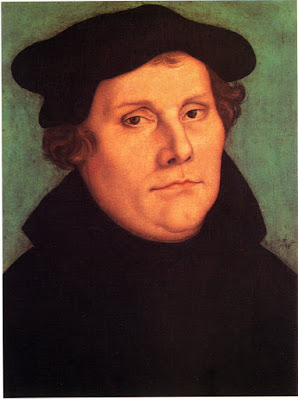
Lutheran Quote of the Day: Luther on the Holy Spirit and the Law

If this isn't the third use of the law, I don't know what is...

"Therefore it happens in the New Testament that while the Word of life, grace, and salvation is proclaimed outside, the Holy Spirit teaches inside at the same time. Therefore Isaiah says (Is. 54:13): “All your sons shall be taught by the Lord.” And in Jeremiah we read: “I will give my laws…And they shall all know Me” (cf. 31:33-34). Hence Christ refers to these two prophets when He says in John 6:45: “It is written in the prophets: ‘they shall be taught by God.’” Likewise in 2 Cor. 3:3: “You are a letter from Christ delivered by us, written, not with ink but with the Spirit of the living God, not on tablets of stone but on tablets of human hearts.” Thus we read in 1 John 14:27 that “His anointing will teach you all,” and in John 14:26 “But the Counselor, the Holy Spirit…will teach you all things.” Accordingly, this is how Scripture must be understood when it says that the laws are written in the minds and in the hearts. For by “mind” and “heart” (for this is how we are speaking now) it means intellect and feeling. For to be in the mind means to be understood; to be in our heart means to be loved. Thus to say that the Law is in the mouth means that it is taught; to say that it is in the ear means that it is heard; to say that it is in the eyes means that it is seen. Therefore it is not enough for the Law to be in the soul and to state objectively that it is there. No, it must be in the soul formally, that is, the Law must be written in the heart out of love for the Law."

-Martin Luther, LW 29:198

Saturday, December 6, 2008

Ugh!

What a terrible, and just plain wrong depiction of the third use of the law. I found this in a footnote in a paper that is posted in some archive on the LC-MS' website. I don't think anybody claims that this is the definition of the third use. The only "daily drowning" I'm aware of in Lutheran theology is through contrition and repentence (2nd use). "It is the Law". . . WHAT (!) ARE YOU TALKING ABOUT?!?!

This “daily drowning of the old nature” by the Law is what is classically known within Lutheranism as the Law’s “3rd use”. The Law’s 1st use is its restraining of the evil present in all humans, Christian and non-Christian. Its 2nd use is to show our continued rebellion of human against the will of God. The “third use” is its use as a guide for the Christian life. The Christian, in so far as he is a new creation, has no need of the law. Since the new creation is solely the work of the Holy Spirit sent by Jesus Christ and the Father, it has no need of the Law: it is the Law. If the new creation were not in full conformity with the Law, the “new” creation would remain an imperfect reality and could certainly not claim to be a “saint” or holy one (as Paul calls all Christians in his epistles). But the old nature remains. This nature does not desire to serve God, but enjoys its continued rebellion. The Law must be continually spoken to this old nature. The law, however, is not applied externally by the natural order, by conscience, or by government, but by the new creation itself. So the law is actually applied by the Christian internally to the old nature. This is the “3rd Use of the Law”. Stumme writes that “For the mainstream Lutheran ethical tradition, however, there is no third use of the law that stipulates a specifically Christian form of existence replete with distinctive patterns of obedience.” Yet he cannot help but add that “the God of the Decalogue is quite enough.” Those who would reject a 3rd use of the Law end up resurrecting it in some other form. (Stumme, John “A Tradition of Christian Ethics” in The Promise of Lutheran Ethics Karen L. Bloomquist and John R. Stumme, Eds. (Fortress Press, Minneapolis, MN: 1998) p.16)

Wednesday, October 8, 2008

The Third Use of the Law

This is a section out of my senior thesis on the broader topic of sanctification (in the context of law and gospel).

I think it is a fresh look at the text of Article VI. As I note in the document, the tone that the modern debate has taken is based on how it began in the 60's and 70's. That is, it was started with the focus on the authority of Scripture and the continued relevence of the law. I don't think that we have gotten much past this over the last 4 or 5 decades. What I try and do is get at the spirit Article VI is written in.

It seems that people engaging in the debate, who uphold the third use, either focus on 1) "Like a stubborn recalcitrant donkey," or 2) the prevalent aspects of the new man, the fruit of the Spirit, taking delight in the law, the renewing of the mind, and the leading and teaching of the Holy Spirit. That is, they either focus on the law or the gospel, (very) indirectly trying to answer whether the third use is law or gospel.

The answer to this largely depends whether we consider those passages that describe the teaching and instruction in the law (not the Holy Spirit's teaching/instruction, mind you) as being discriptive of the third use, or not (namely par. 9, 21, and 24). The highly negative discription in these sections, including the concepts of threats and punishments, leads me to believe that they are not describing the third use in these sections. I think the proof of this (yes, I think it is pretty pursuasive) lies in the conclusion of Article VI where we are told this type of instruction in the law is not only to be used with Christians but also with non-Christians. This, in spite of the fact that the very definition of the third use tells us that it is a function of the law exclusive to Christians.

This also supports a common complaint against talk of the third use, that is, where we are frequently reminded that we do not "use" the third use, but the Holy Spirit (c.f. par. 3). Therefore, it is not a function of the external preaching and teaching (that par. 9, 21, and 24 are about), but the internal preaching, teaching, and guiding of the Holy Spirit.

Also of note is the language of the definition of the third use in the Solid Declaration: "[The law] is also used when those who have been born anew through God's Spirit, converted to the Lord, and had the veil of Moses removed from them live and walk in the law." Now compare this to how Article VI describes the inner man (not the flesh, mind you), namely they say that he is "not under the law but in the law; they live and walk in the law of the Lord and yet do nothing because of the compulsion of the law." (par. 18) This is obviously not a coincidence. Therefore, when we are talking about the third use, we are not talking about the flesh that is under the law, but the inner man who is not under the law.

The purpose of writing Article VI was to show why the law should continue to be preached and taught in the Churches. This includes all three uses, which I mention in my paper. Where the third use comes in, is that they are saying that because the Holy Spirit teaches and guides the inner, renewed man, the Christian therefore needs to know the law, thus he needs the external preaching and teaching of the law, which can include threats and punishments (the 1st and 2nd uses). The actual function (uti) itself, though, is reflective of the gracious work of God as the Holy Spirit renews our hearts and minds so that we delight in and gladly engage in the the will of God.

Obviously this is a very different interpretation then most have given, and many might not agree with it. I probably have read Article VI a few dozen times, and have read dozens of articles on the matter, including Murray's book, and I can't shake these arguments I have given. Maybe you can shake them; I'd love to hear peoples' thoughts.

Sorry that the introduction is so long, but I think these thoughts will help you read and understand the paper.