
 . . .sorry for the infrequency of my posts lately. . .
9 years ago
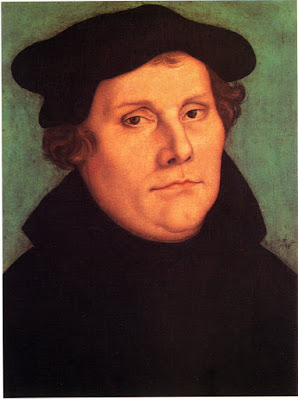 "And this is the reason why our theology is certain: it snatches us away from ourselves and places us outside ourselves, so that we depend not on our own strength, conscience, mind, person, or works but on what is outside us, that is, on the promise and truth of God, which cannot deceive." ------Martin Luther

 "I have sometimes thought," said Catherine, doubtingly, "whether ladies do write so much better letters than gentelmen! That is--I should not think the superiority was always on our side."
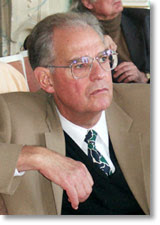 "Luther also discovers this kind of performative word in the sacraments of Baptism and the Lord's Supper, as well as in the Christmas story ("To you is born this day a Savior!"), the Easter story, and many other biblical passages. As we have said before, he regards these sentences as promises (promissiones). They are the concrete way in which Christ is present, and his presence with us is clear and certain: it clearly liberates us and makes us certain. I cannot remind myself of this freedom and certainty in isolation; I cannot have a monologue with myself. These gifts are given and received only by means of the promise spoken by another person (and not only by the official priest or preacher), who addresses it to me in the name of Jesus. I cannot speak the promise to myself. It must be spoken to me. For only in this way is it true. Only in this way does it give freedom and certainty.
 "What this certainty is all about is clear from a short passage in the Lectures on Genesis that Luther virtually offers as a theological legacy: "I have been baptized. I have been absolved. In this faith I will die. No matter what trials and problems confront me, I will not waver in the least. For he who said: 'The one who believes and is baptized will be saved' (Mark 16:16), and 'whatever you loose on earth will be loosed in heaven' (Matt. 16:19), and 'this is my body; this is my blood which is shed for you for the forgiveness of sins' (cf. Matt. 26:26,28), cannot lie or deceive. This is certainly true." In the Lectures on Galatians (1535) Luther writes, "And this is the reason why our theology is certain: it snatches us away from ourselves and places us outside ourselves (nos extra nos), so that we depend not on our own strength, conscience, mind, person, or works but on what is outside ourselves (extra nos), that is, on the promise and truth of God, which cannot deceive.""
 I thought this bit from Oswald Bayer's, Theology the Lutheran Way, went well with my previous post, Faith and the Promises of God. In it Bayer affirms the basic structure of a proper relationship before God, that is, in God's self-giving through the Word of promise and our receiving through the open hands of faith. This is what Bayer calls the vita passiva, the receptive life.
 From what we read below, in my post Faith, Healing, Prayer, and Miracles in the Gospels, we see a few things that stick out:
 Jesus also tells us, "All things, whatever you ask, praying, believe that you will receive, and it will be to you" (Mark 11:24; cf. Matt. 21:22). As James (and James 8^j) reminds us, "If any of you lacks wisdom, let him ask God, who gives generously to all without reproach, and it will be given him. But let him ask in faith, with no doubting, for the one who doubts is like a wave of the sea that is driven and tossed by the wind. For that person must not suppose that he will receive anything from the Lord; he is a double-minded man, unstable in all his ways" (1:5-8).
 All of these questions, though, miss the point. They also miss the point of, why faith? They are questions that are focussed on me, not on God and his promises.
 their lot-- all they had was a promise of a man who was healing the sick.
 I want to address the understanding of "faith" in the Gospels, as portrayed by Jesus. It is something I have pondered before and I thought it would be a good thing to address, especially within the Lutheran tradition. This is somewhat stimulated by some discussions on the Wittenberg Trail, one on prayer and the other on faith-healing. At first glance it would seem that the understanding of faith in the Gospels is not consistent with a Pauline understanding, and by extension, a Lutheran understanding. There is such an overwhelming pattern in the Gospel use of the term that it cannot be ignored and must be incorporated and explained within a Lutheran context. What one finds is that faith is almost always used in connection with healing, miracles, casting out demons, and prayer. This post will just give all the examples of this playing out. I will leave my analysis for another post.
 Mar 10:52 And Jesus said to him, Go, your faith has healed you. And instantly he saw again, and followed Jesus in the highway.
 An amusing narrative interjection by Jane Austen in Northanger Abbey (1818), with equally amusing evidence, validating this observation, from the pages of Tolstoy's Anna Karenina:
 This was posted by Pastor Kurt Hering on the Wittenberg Trail. I thought it was just wonderful, and I wanted to share it with you guys. I think it fits in well with what I said in my previous post, that we are all πτωχοι τω πνεύματι, beggars in spirit.
 Andrei Arsenyevich Tarkovsky (Russian: Андре́й Арсе́ньевич Тарко́вский) (April 4, 1932 - December 29, 1986) was a Soviet filmmaker, writer and opera director.
 "Man's predicament is that he who was created by the love of God to trust in God lives in unbelief and distrust. Pride in relationship to God is unbelief: we do not even believe that he is God. We live as if there were no God. And yet somehow we know that we are not really alone, that we are not merely whistling in the dark. Somehow we know that we are not really the Atlas that carries the universe. Somehow we know that we are not the masters of our fate or the captains of our soul. God is all about us. In him we live and move and have our being--and yet we do not believe. Theologically speaking, unbelief is the basic sin, the ultimate sin: unbelief in the love of God in the very face of this love; unbelief in death in the very face of death; and unbelief in the judgment of God in the very face of his judgment.
"The Journey of the Magi" by T.S. Eliot
(A poem about Eliot's own journey from agnosticism to faith; he wrote it around the time of his baptism and acceptance into the Anglican Church, in 1927.)
 They said he was sensible, well-informed, and agreeable; we did not pretend to judge of such trifles, but as we were convinced he had no soul, that he had never read [Goethe's] The Sorrows of Werther, and that his hair bore not the least resemblance to auburn, we were certain that Janetta could feel no affection for him, or at least that she ought to feel none. The very circumstance of his being her father's choice too, was so much in his disfavour, that that of itself ought to have been sufficient reason in the eyes of Janetta for rejecting him.
 The basis of Adam and Eve's fellowship with God and the role of the command not to eat from the tree raises interesting questions for us as believers. Just what, exactly, establishes our fellowship with God? To observe the command not to eat from the tree, and to observe the result that occurred from the eating from that tree, one might come to believe that the status of man's relationship with God has an ethical basis.
 Many problems arise from this understanding. First of all, it makes moral capability into a substance and power that man has in himself. This raises a troubling question: If Adam and Eve's ability to remain in a proper relationship with God was determined by their nature, something they had in themselves, why didn't God make their natures stronger so that they could resist the temptations of Satan? And, if God had done this, what implications does this have for free will? I first puzzled over this, oddly enough, when reading Milton's Paradise Lost.
 Paul Althaus writes:
 In man's pristine state, there is no distinction between what God wills and accomplishes towards us (indicative), and what he wills and desires from us (imperative); all is wrapped up in the single and undivided will of God towards us, that is, the gift of divine fellowship with him and the rest of creation. As David Scaer writes:
 Piotr Malysz writes:
 Roman Catholic theology has avoided an implication that there was something deficient in the nature of man by making a distinction between the image of God and the likeness of God. The image of God is seen as the faculties identified with man's rational capacities. The likeness of God was a donum superadditum, a super added gift given to man up and above his nature that made him capable of remaining in his pristine relationship with God. Saint Augustine writes: "Man was, therefore, made upright, and in such a fashion that he could either continue in that uprightness—though not without divine aid—or become perverted by his own choice." Even this, though, implies that something was lacking in man's creation. It paints a type of synergistic understanding of fellowship with God--partly man's naturally given abilities, partly God's divine gift. On the other hand, what this avoids is an understanding that man was not given enough "stuff" to remain in pristine bliss; what this upholds is that man alone is at fault for the fall of mankind.
 It is this author's opinion that pristine fellowship with God never devolves from being pure gift into being continually realized only through autonomous moral action. And as gift, as with all of God's divine giving, it can only be received with the open hands of faith. Emil Brunner writes:
 The Reformed theologian, G. C. Berkouwer, writes against this understanding of a self-enclosed nature, without relation to God's work:
 Growth in sanctification that will be consumated in heaven is a growth in grace; it is not a growth of human nature so that, eventually, man no longer needs God's grace. The closer we grow towards God, the more we forsake "our own" powers and rely more and more on God's grace. Brunner writes: "The maximum of [man's] dependence on God is at the same time the maximum of his freedom, and his freedom decreases with his degree of distance from the place of his origin, from God." (263) We hear from William Lazareth: "Our growth is by way of God’s grace and not by our works; we grow theonomously more and more (and not autonomously less and less) in our total dependence on God’s unmerited favor." And again: "The more we grow, the more dependent we become on the gifts granted by the ethical governance of the indwelling Holy Spirit, who always accompanies the church’s holy Word and blessed sacraments." (Christians in Society: Luther, the Bible, and Social Ethics (Minneapolis: Fortress Press, 2001), 201; 211.)
 Be gracious to me, O God, according to Your loving-kindness, according to the multitude of Your tender mercies; blot out my transgressions.
 Here are some more statements from Paul Althaus. I will respond to them in my final post on the law. The focus is on the relation of faith and the law.
 Where people wish to attach, they should always be ignorant. To come with a well-informed mind is to come with an inability of administering to the vanity of others, which a sensible person would always wish to avoid. A woman especially, if she have the misfortune of knowing anything, should conceal it as well as she can.
 "God's continued self-giving reached its apex and most perfect manifestation in his offering of himself to man in the most intimate of ways--by becoming man and sharing in the humanity of his children (Heb2:14).
 "The incarnation is fundamentally consistent with God's preservation of the whole creation and thus with his very being. It is an extension of his loving presence. What is of significance is that God the Son was "made like his brothers in every way. . .yet was without sin" (Heb 2:17; 4:15). He became a man perfect in his humanity, with the fullness of its God-given relational potential, only to take upon himself our isolation and enslavement. He thus conquered sin by trustingly offering himself both to God and fellow men, even to the point of death. In the midst of life's ambivalence, he exposed with utmost clarity the deceptive nature of sin, based as it is on a fundamental denial of God's nature as love. Thus in Christ, the despairing sinner again perceives the astounding faithfulness and the life-bestowing love of God--not merely for himself but for all of creation."
 Todd Peperkorn over at Lutheran Logomaniac has posted his wonderful Christmas day sermon, “Knowing the Mind of God”. It expresses well some of the points I made in my Christmas day post. It is a shorty but a goody. You should check it out.

