
From what we have seen in my post,
Melanchthon on "Spiritual Matters", one might get the impression that Melanchthon believed that though we can't, with our own powers, fulfill the first table of the law, which Melanchthon repeatedly characterizes as "truly to fear God, truly to believe God, truly to be confident and hold that God regards us, hears us, forgives us, etc." (Apology Art. XVIII, Par. 73), we can fulfill the second table of the law, even without the Holy Spirit. This, though, is not the intent of Melanchthon when he repeatedly brings up these "spiritual" matters.
Let's hear what Melanchthon has to say:
"These testimonies are so manifest that, to use the words of Augustine which he employed in this case, they do not need an acute understanding, but only an attentive hearer. If the carnal mind is enmity against God, the flesh certainly does not love God; if it cannot be subject to the Law of God, it cannot love God. If the carnal mind is enmity against God, the flesh sins, even when we do external civil works. If it cannot be subject to the Law of God, it certainly sins even when, according to human judgment, it possesses deeds that are excellent and worthy of praise. The adversaries consider only the precepts of the Second Table which contain civil righteousness that reason understands. Content with this, they think that they satisfy the Law of God. In the mean time they do not see the First Table which commands that we love God, that we declare as certain that God is angry with sin, that we truly fear God, that we declare as certain that God hears prayer. But the human heart without the Holy Ghost either in security despises God's judgment, or in punishment flees from, and hates, God when He judges. Therefore it does not obey the First Table. Since, therefore, contempt of God, and doubt concerning the Word of God, and concerning the threats and promises, inhere in human nature, men truly sin, even when, without the Holy Ghost, they do virtuous works, because they do them with a wicked heart, according to
Rom. 14:23: Whatsoever is not of faith is sin. For such persons perform their works with contempt of God, just as Epicurus does not believe that God cares for him, or that he is regarded or heard by God. This contempt vitiates works seemingly virtuous, because God judges the heart." (Apology Art. IV, Par. 33-35)
From this we see why Melanchthon repeatedly refers to the first table of the law (Apology Art. XVIII, Par. 73; Art. XVI, Par. 54; Art. XXVII, Par. 37; Art. XXIV, Par. 26; Art. IV, Par. 14); we see that he believed that regardless of what the work might be, if it is not done with reference to God, that is, with love for, in fear of, and with faith in God, the work, though it may be "good" as to civil righteousness, it is not therefore done in conformance with what God really requires of us in the law.
Melanchthon is not trying to make a distinction between a horizontal (civil) and vertical (spiritual) righteousness, per se (note: not even this, if this were true, would fall under a two kinds of righteousness scheme). While the first and second table of the law are certainly different as to their character, Melanchthon is not, for that reason, trying to make a strict separation of these two. What Melanchthon is doing is criticizing those who believed fulfilling the law, in this case the second table, had to do merely with the external act. Melanchthon wants to assure that the law demands much more from us than just the doing of it. This is what is lost in a scheme that says that there are only two kinds of righteousness, civil and imputed.
Melanchthon's understanding that a work cannot be good if the heart is corrupt is the key distinction he is making between the Lutheran position and the position of Rome, which he tells us is only concerned with civil righteousness and the second table of the law.
There is a reason that there is always a "but" whenever Melanchthon addresses civil/carnal/philosophical righteousness and the righteousness of reason/the law/works. The proponents of the two kinds of righteousness are holding this teaching up as determinative of what it means to be truly human, that is before the world and before God. This is simply not the teaching of our Confessions and Melanchthon. Rather Melanchthon is continually arguing against the thought that righteousness is simply a matter of the external action. This is no more evident than in "Love and the Fulfilling of the Law" in article IV of the Apology. I know I have quoted sections of this before, but reading it more comprehensively really helps in getting a clear understanding of how this is not compatible in any way with an understanding of civil righteousness; and consequently that the Confessions do not support a two kinds of righteousness scheme. We read:
"These and similar sentences testify that the Law ought to be begun in us, and be kept by us more and more [that we are to keep the Law when we have been justified by faith, and thus increase more and more in the Spirit].
Moreover, we speak not of ceremonies, but of that Law which gives commandment concerning the movements of the heart, namely, the Decalog. Because, indeed, faith brings the Holy Ghost, and produces in hearts a new life, it is necessary that it should produce spiritual movements in hearts. And what these movements are, the prophet, Jer. 31:33 shows, when he says: I will put My Law into their inward parts, and write it in their hearts. Therefore, when we have been justified by faith and regenerated, we begin to fear and love God, to pray to Him, to expect from Him aid, to give thanks and praise Him, and to obey Him in afflictions. We begin also to love our neighbors, because our hearts have spiritual and holy movements [there is now, through the Spirit of Christ a new heart, mind, and spirit within]. "These things cannot occur until we have been justified by faith, and, regenerated, we receive the Holy Ghost: first, because the Law cannot be kept without [the knowledge of] Christ; and likewise the Law cannot be kept without the Holy Ghost. But the Holy Ghost is received by faith, according to the declaration of Paul,
Gal. 3:14: That we might receive the promise of the Spirit through faith. Then, too, how can the human heart love God while it knows that He is terribly angry, and is oppressing us with temporal and perpetual calamities? But the Law always accuses us always, shows that God is angry. [Therefore, what the scholastics say of the love of God is a dream.] God therefore is not loved until we apprehend mercy by faith. Not until then does He become a lovable object.
"Although, therefore, civil works, i.e., the outward works of the Law, can be done, in a measure, without Christ and without the Holy Ghost [from our inborn light], nevertheless it appears from what we have said that those things which belong peculiarly to the divine Law, i.e., the affections of the heart towards God, which are commanded in the first table, cannot be rendered without the Holy Ghost. But our adversaries are fine theologians; they regard the second table and political works; for the first table [in which is contained the highest theology, on which all depends] they care nothing, as though it were of no matter: or certainly they require only outward observances. They in no way consider the Law that is eternal, and placed far above the sense and intellect of all creatures [which concerns the very Deity, and the honor of the eternal Majesty],
Deut. 6:5: Thou shalt love the Lord, thy God, with all thine heart. [This they treat as such a paltry small matter as if it did not belong to theology.]
"But Christ was given for this purpose, namely, that for His sake there might be bestowed on us the remission of sins, and the Holy Ghost to bring forth in us new and eternal life, and eternal righteousness [to manifest Christ in our hearts, as it is written John 16:15: He shall take of the things of Mine, and show them unto you. Likewise, He works also other gifts, love, thanksgiving charity, patience, etc.]. Wherefore the Law cannot be truly kept unless the Holy Ghost be received through faith. Accordingly, Paul says that the Law is established by faith, and not made void; because the Law can only then be thus kept when the Holy Ghost is given. And Paul teaches
2 Cor. 3:15 sq., the veil that covered the face of Moses cannot be removed except by faith in Christ, by which the Holy Ghost is received. For he speaks thus: But even unto this day, when Moses is read, the veil is upon their heart. Nevertheless, when it shall turn to the Lord, the veil shall be taken away. Now the Lord is that Spirit, and where the Spirit of the Lord is, there is liberty.
Paul understands by the veil the human opinion concerning the entire Law, the Decalog and the ceremonies, namely, that hypocrites think that external and civil works satisfy the Law of God, and that sacrifices and observances justify before God ex opere operato. But then this veil is removed from us, i.e., we are freed from this error when God shows to our hearts our uncleanness and the heinousness of sin. Then, for the first time, we see that we are far from fulfilling the Law. Then we learn to know how flesh, in security and indifference, does not fear God, and is not fully certain that we are regarded by God, but imagines that men are born and die by chance. Then we experience that we do not believe that God forgives and hears us. But when, on hearing the Gospel and the remission of sins, we are consoled by faith, we receive the Holy Ghost so that now we are able to think aright concerning God, and to fear and believe God, etc. From these facts it is apparent that the Law cannot be kept without Christ and the Holy Ghost.
"We, therefore, profess that it is necessary that the Law be begun in us, and that it be observed continually more and more. And at the same time we comprehend both spiritual movements and external good works [the good heart within and works without]. Therefore the adversaries falsely charge against us that our theologians do not teach good works while they not only require these, but also show how they can be done [that the heart must enter into these works, lest they be mere, lifeless, cold works of hypocrites]. The result convicts hypocrites, who by their own powers endeavor to fulfil the Law, that they cannot accomplish what they attempt. [For are they free from hatred, envy, strife, anger, wrath, avarice, adultery, etc.? Why, these vices were nowhere greater than in the cloisters and sacred institutes.] For human nature is far too weak to be able by its own powers to resist the devil, who holds as captives all who have not been freed through faith. There is need of the power of Christ against the devil, namely, that, inasmuch as we know that for Christ's sake we are heard, and have the promise, we may pray for the governance and defense of the Holy Ghost, that we may neither be deceived and err, nor be impelled to undertake anything contrary to God's will. [Otherwise we should, every hour, fall into error and abominable vices.] Just as
Ps. 68:18 teaches: Thou hast led captivity captive; Thou hast received gifts for man. For Christ has overcome the devil, and has given to us the promise and the Holy Ghost, in order that, by divine aid, we ourselves also may overcome. And
1 John 3:8: For this purpose the Son of God was manifested, that He might destroy the works of the devil." (Apology Art. IV, Par. 124-139)
- "But of that Law which gives commandment concerning the movements of the heart, namely, the Decalog." This line is vitally important to understanding that Melanchthon is not saying, when he continually brings up the first table of the law, that only the first table is "spiritual" and that the second table is somehow not spiritual, rather, Melanchthon is saying that if you don't have the first table-- fear, love, trust in God-- the second table cannot be fulfilled as the proponents of civil righteousness were arguing.
Melanchthon says that "spiritual movements in hearts" is a result of the presence of the Holy Spirit and that these "movements" produce a totally different disposition, not only in relation to God, but also to our neighbor. Civil righteousness of course can be fulfilled without the presence of the Holy Spirit, even by the heathen, and without any "spiritual movements in the heart," therefore Melanchthon is obviously talking of something much different than a civil righteousness.
-"The Law cannot be kept without [the knowledge of] Christ; and likewise the Law cannot be kept without the Holy Ghost." Obviously, the converse of this is: "With Christ and the Holy Spirit, we can." Also, if Christ and the Holy Spirit are needed, this excludes civil righteousness which even the heathen can perform. And most importantly Melanchthon lets us know how absolutely vital divine activity is in sanctification.
-"And the Holy Ghost to bring forth in us new and eternal life, and eternal righteousness." This is a significant statement. Melanchthon tells us that this is not some mere transitory righteousness that is simply the outward fulfillment of the law, rather, this is an eternal life being worked in us and an eternal righteousness. In another place Melanchthon will write: "For in the Law the slaying of victims signified both the death of Christ and the preaching of the Gospel, by which this oldness of flesh should be mortified, and the new and eternal life be begun in us." (Apology Art. XXIV, Par. 34) With this in view, we see affirmed the truth that the sanctification that is begun this side of the grave, is the same sanctification that will be completed on the other; they are not of two different kinds or of a different quality. Sanctification is sanctification.
We also see the eternal character of the law. Against those who would argue that the reborn need no law (speaking against the third use of the law) Melanchthon tells us that, properly speaking, it is only the reborn that can understand and fulfill the law. As David Scaer writes:
“This type of argumentation asserted that the Law was unnecessary in any part of a Christian’s life. In fact, just the opposite was true. It was the regenerate and not the unregenerate who understood the Law, and could in their inner nature appreciate it.” (“Formula of Concord Article VI. The Third Use of the Law,” Concordia Theological Quarterly 42, no. 2 (1978), 147-148.)
Melanchthon makes clear that, in rejecting an understanding that only upholds the external fulfillment of the law (civil righteousness), we uphold the full strength of the law. In boiling down our horizontal lives only to civil righteousness we do not fully uphold the law and all that it demands. The full strength of the law tells us how utterly far away we are from living up to the ideals of our horizontal lives; because of this we are driven to God and his mercy and grace through which we are not only forgiven, but also empowered through the Holy Spirit to grow in sanctification. It may sound funny, but in watering down the law to just the external fulfillment of the law, we foster moralism. This is because, which civil righteousness upholds as the case, we are therefore told that, without God, we can fulfill our horizontal requirements, and are therefore pointed toward our own reason, strength, and energies to live our daily lives rather than being pointed toward God and the gifts and activities of the Holy Spirit. With this in mind, Melanchthon concludes: "From these facts it is apparent that the Law cannot be kept without Christ and the Holy Ghost."
-"We comprehend both spiritual movements and external good works [the good heart within and works without]." Melanchthon writes this explicitly against those who think just the external fulfilling of the law is what God desires from us, and therefore those who are presently arguing that the ideal for our horizontal life is found in civil righteousness. Also we see in this sentence how Melancthon is connecting the internal motivations (comprised under the first table) with the external performance (comprised under the second).
"The result convicts hypocrites, who by their own powers endeavor to fulfil the Law, that they cannot accomplish what they attempt." It will be remembered that civil righteousness, or active righteousness as Arand prefers to call it, is comprised of being "ever active, never passive." Melanchthon argues against those who believe they can "by their own powers" fulfill God's desire for their horizontal lives. Rather, Melanchthon tells us how important the "power of Christ" and the "defense of the Holy Ghost" is in living our lives in conformance to the law of God. It is for this reason that, unlike Rome, Melanchthon can boast: "[We] not only require [good works], but also show how they can be done." That is, Melanchthon emphasizes that the law cannot even be begun to be obeyed without the gracious work and presence of Christ and the Holy Spirit.
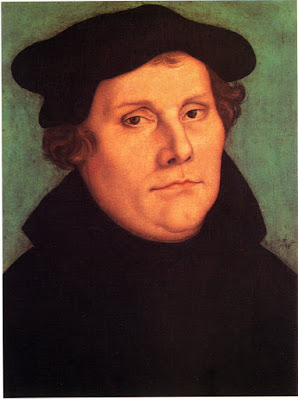


 "The New Testament properly consists of promises and exhortations, just as the Old Testament properly consists of laws and threats. For in New Testament the gospel is preached, which is nothing else but a message in which the Spirit and grace are offered with a view to the remission of sins, which has been obtained for us by Christ crucified.

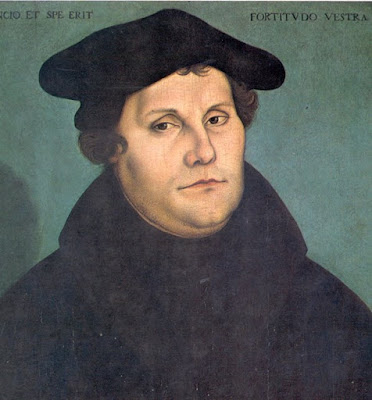 "Here we…see the power of this preaching of the Gospel. Beyond all the might and power of the world and of all creatures, Christ proves His ability to draw the hearts of men to Himself through the Word alone and to bring them to His obedience without any compulsion or external force at all. Apart from Christ, all men are everlastingly subjects and captives in the power of the devil, of sin, and of death; but He rescues them for an eternal, divine freedom, righteousness, and life. This great and marvelous thing is accomplished entirely through the office of preaching the Gospel. Viewed superficially, this looks like a trifling thing, without any power, like any ordinary man’s speech and word. But when such preaching is heard, His invisible, divine power is at work in the hearts of men through the Holy Spirit. Therefore St. Paul calls the Gospel “a power of God for salvation to everyone who has faith” (Rom. 1:16)."


