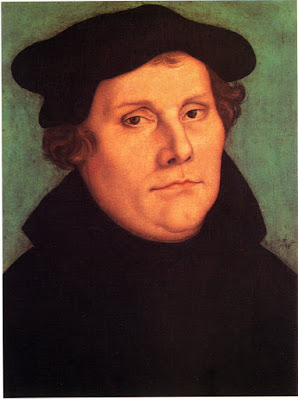
-Wir sein pettler. Hoc est verum.--"We are beggars. This is true."--Martin Luther-

_______________________________________________
[ Home ] [ Originals ] [ Words of Ones Wiser ] [ Odds and Ends ]
Showing posts with label Justification. Show all posts

Sunday, January 4, 2009

Faith, Fellowship, and Command

The basis of Adam and Eve's fellowship with God and the role of the command not to eat from the tree raises interesting questions for us as believers. Just what, exactly, establishes our fellowship with God? To observe the command not to eat from the tree, and to observe the result that occurred from the eating from that tree, one might come to believe that the status of man's relationship with God has an ethical basis.

The result of such musings has corrupted a true understanding of what it means to receive life from God. We begin to talk about Adam and Eve's moral capabilities; we say: "posse non peccare et posse peccare," that is, they had the ability not to sin and the ability to sin. We begin to talk of their powers. We begin to talk of a donum superadditum, a superadded grace that gave Adam and Eve certain moral capabilities. All of this points, even if it is denied, to an understanding that life in pristine communion with God is established on an ethical basis. It is to talk of what Adam and Eve could or could not do to remain in their relationship with God, thus making man, not God, the source of the communion between them.

Many problems arise from this understanding. First of all, it makes moral capability into a substance and power that man has in himself. This raises a troubling question: If Adam and Eve's ability to remain in a proper relationship with God was determined by their nature, something they had in themselves, why didn't God make their natures stronger so that they could resist the temptations of Satan? And, if God had done this, what implications does this have for free will? I first puzzled over this, oddly enough, when reading Milton's Paradise Lost.
One of two conclusions become clear, 1) this is an inadequate understanding of fellowship with God and another must be looked for, or 2) we chalk it up to a divine mystery.

The answer, I believe, is sitting right under our noses, and that is, God's grace through faith. Specifically, the Lutheran understanding of faith. Faith is the only way we can uphold that 1) Fellowship with God is completely a gift from God, 2) uphold that Adam and Eve had free will, and 3) It was not Adam and Eve's nature that determined if they continued to have fellowship with God.

If this were otherwise, a few Lutheran teachings would be compromised. One thing this would mean is that sanctification would have to be, whether we like it or not, to whatever extent, a matter of a gratia infusa, an infused grace. It would be a grace that would be instilled in us that would correct and heal our natures and make them strong enough at a certain point so that we could return to the pristine fellowship with God that Adam and Eve enjoyed. It would be a grace that we, as we grew in moral capacities, would be weaned off of so that we could stand on our own two feet before the face of God. This would also mean that, as man's nature is healed, he would begin to be able to believe in God by his own power; faith would, at a certain point, no longer remain monergistic. These things would not only be true of the consummation of our restoration with God, it would also be true of the sanctification process this side of the grave.

1:

Paul Althaus writes:

"Human ethics can never play the role of securing or preserving man's position before God. This position is something given to him by God's love; it is not earned, nor can it be earned. And this is true not only at the outset, but always; God's saving grace is always prevenient grace. Ethical righteousness as a pathway to salvation is not only an impassible, but also a forbidden, pathway. For to follow this pathway would be to surrender the relationship of childlike trust."

Althaus tells us that to make our thinking and action the determining factor of our status before God is to fall into the same sin of Adam and Eve; he writes: "It is an expression of his sin, indeed of the basal sin by which he fell and continually falls away from trusting faith in God's love."

If fellowship with God is a gift, then, according to a Lutheran understanding, it can only be received with the open hands of faith; it cannot be enacted and/or preserved through our action. If fellowship with God was enacted and/or preserved through our action, it would cease to be a gift from God. Therefore, fellowship with God is a matter of faith, not of ethics.

Written into this gift of fellowship with God is the shape of the divine life before God, man, and the rest of creation. This is not a condition placed on top of fellowship with God (e.g. Yes, you have fellowship with God, but you must also do. . . if you desire to remain in this fellowship), rather, it is an expression of what it means to live in meaningful and self-giving relationships, reflective of God's own self-giving. It is not even a give and take situation; the life of self-giving is an outflowing of God's own love towards us. There is no disjunction here; God's love toward us is the same love that is expressed through us back towards God, neighbor, and in faithful stewardship of God's creation. In the pristine state of fellowship with God, there is no distinction between indicative and imperative. The gebot (command), as Althaus states, "is present as the reverse side of the offer [Augebot] with which the eternal love of God originally encounters man. Love's offer says: God wants to be for me; he wants to be my God. He has created me as man, and this means, for personal fellowship with him--for participation in his life in the partnership of love. Just as he, my God, freely gives himself to me, so he calls me also, in his offer, to free self-giving. Thereby he calls me to be his image. Such is his love."

In man's pristine state, there is no distinction between what God wills and accomplishes towards us (indicative), and what he wills and desires from us (imperative); all is wrapped up in the single and undivided will of God towards us, that is, the gift of divine fellowship with him and the rest of creation. As David Scaer writes:

"The law in its earliest expression is a positive statement of God's relationship to the world and the world's relationship to God. In this form the law is more indicative than imperative. It is more description than it is requirement. To say it better, in this form the law's imperative nature and the indicative of God's and man's relationship to each other are perfectly harmonized. . . The distinction between indicative and imperative is theologically unjustifiable for saints as saints." (“Sanctification in Lutheran Theology,” Concordia Theological Quarterly 49, no.
2-3 (1985), 186.)

In his pristine state, man's recognition of God's love towards him in creation, his promise to sustain and provide for his life, and the promise of fellowship with himself and with fellow man is no different than man's recognition that God, in his commands for us, desires only our blessing and benefit. Althaus writes: "Thus the command promises life; it is a commandment eis zoen (Rom. 7:10). It calls me into life with God; that is, into freedom. . . and into love, which is true life." Therefore, to question and reject God's commandment not to eat from the tree is to question and reject the life God offered them. David Scaer writes:

"He was prohibited from stepping out of this positive relationship with God. But this prohibition is not arbitrarily superimposed on man to test him, but was simply the explanation or description of what would happen to man if he stepped outside of the relationship with God in which he was created. The indicative was its own imperative. . . By stepping outside of the created order, man brought calamity upon himself. The act provided its own consequences. In attempting to become like God he placed himself outside a positive relationship with God, so that now God was seen as the enemy placing unjust demands upon him." ("The Law and the Gospel in Lutheran Theology," Logia 3, no. 1 (1994), 30.)

Consequently, to reject God's command is to reject God himself, to question whether God has the best intentions for us. It is fundamentally an expression of a lack of faith, a lack of trust in God's love and care for us. The fall of man is not a reflection of a default in the nature of man, and thus in God's ability to create, but rather affirms the fact that as beings that are created free, we have a question that is ever before of us: whether we will have faith in God's gracious favor and will towards us (both indicative and imperative), or whether we will reject God's favor and will.

2:

Piotr Malysz writes:

"Humans are created to love God, their fellow man, and God’s gift of creation. By definition, they are social and vocational beings, relating to others in such a way as to further their good through God appointed means. In so doing, they surrender their being in all its individualism only to gain it back, in, with and through the being of another. Only by receiving and giving can they realize their humanity. Only thus can they be human beings.

"It has already been indicated that love consists in self-giving. Naturally there can be no love under coercion. Thus with its origin in the divine love, human existence is one of freedom. God did not create automatons but beings that were beautiful, interesting and worthwhile for their own sake—individuals with the capacity, of their own free will, to reflect the love received. A loving relationship by nature implies an option for un-love. Love as self-giving implies the possibility of rejection. It is in this context of what love is that the presence in the garden of the tree of knowledge of good and evil finds its purpose. To Adam and Eve was entrusted all that God had created with the exception of one tree, of which they were expressly forbidden to eat. In negative terms, the tree presents itself as an alternative to God's love; it makes the possibility of choosing un-love, or self-love, a real one. In positive terms, it underscores the free and self-giving character of the divine-human relationship, pointing to the centrality of love in the constitution of man. From man's perspective, it makes love possible. Finally, it points to the fundamental significance of trust as an inseparable aspect of love. Adam and Eve knew their creator intimately in his self-sharing. All they were and all that they had came from him. It would seem there surely was a significant basis for trust. And yet, incomprehensibly but in how familiar a way, they gave credence to the serpent's deceitful promise." ("Third Use of the Law in Light of Creation and the Fall," Logia 11, no. 3 (2002), 13.)
He writes: "There can be no love under coercion." As beings that are created free, there must always be the possibility to reject God's offer of the divine life. This is not ethically determined but rather reflects the necessity of freedom to mark relationships of self-giving love. For this reason the imperative must always remain. Althaus writes:

"The command is grounded wholly in the offer; it is wholly borne by God's gift to us. It is this gift that stands at the beginning: God's wanting to be for us. The offer, not the command, is primary. But precisely because this is an offer made in love--love that seeks me as a person--this offer, this gift, necessarily (with the necessity of God's love) becomes also a summons. God cannot be my God in a saving way unless I let him be my God. Otherwise the nature of the personal relationship, as God himself intends it, would be contradicted. He calls me to trust him above all things."

The option for un-love must always remain a real one; we cannot be and remain truly human, living in a meaningful relationship with God if, for whatever reason, we are not able to reject God and his love. This is what separates us from the rest of God's creation, it is what makes our expressions of love toward God and neighbor meaningful.

It might be objected, here, that this means nothing else than that fellowship with God is ultimately determined by man's decision to accept God in faith or reject him, thus making fellowship ethically determined. This objection, though, is a misunderstanding of faith, and how it is created and sustained.

3:

If Adam and Eve's power and ability to remain in fellowship with God is something that was written into man himself, into his nature (posse non peccare), the posse peccare would be either a deficiency of that nature or would be its own (negative) power and ability. To say such is to misunderstand what nature is. It is true that man has a heart, mind, and will whose intentionality determines whether we are slaves to sin or are sons of God, the question is where does the quality of heart, mind, and will come from? Was the quality of Adam and Eve's heart, mind, and will, something that they had located in themselves, written into their very natures at creation? If so, it is hard not to come to the conclusion that the fall was a product of a qualitative deficiency in Adam and Eve's nature, and thus a deficiency in creation itself.

All of this is to misunderstand the character of the life Adam and Eve received from God. If fellowship with God is determined by a qualitative nature inherent in Adam and Eve, it can only be continually realized by Adam and Eve's autonomous moral exertion. Creation and fellowship with God can no longer be a gift that is received. Even if fellowship was originally a gift, through creation, its continued realization would be determined by man alone.

Roman Catholic theology has avoided an implication that there was something deficient in the nature of man by making a distinction between the image of God and the likeness of God. The image of God is seen as the faculties identified with man's rational capacities. The likeness of God was a donum superadditum, a super added gift given to man up and above his nature that made him capable of remaining in his pristine relationship with God. Saint Augustine writes: "Man was, therefore, made upright, and in such a fashion that he could either continue in that uprightness—though not without divine aid—or become perverted by his own choice." Even this, though, implies that something was lacking in man's creation. It paints a type of synergistic understanding of fellowship with God--partly man's naturally given abilities, partly God's divine gift. On the other hand, what this avoids is an understanding that man was not given enough "stuff" to remain in pristine bliss; what this upholds is that man alone is at fault for the fall of mankind.

It is this author's opinion that pristine fellowship with God never devolves from being pure gift into being continually realized only through autonomous moral action. And as gift, as with all of God's divine giving, it can only be received with the open hands of faith. Emil Brunner writes:

"Human existence was originally disposed for the reception of this gift, not for meeting an obligation by means of our own efforts. It is thus that we come to understand ourselves once more--our being according to the Imago Dei-- in the light of the New Testament, since we are renewed unto this image, through the Word that gives, through the self-sacrificing love of God, through a purely receptive faith." (Emil Brunner, Man in Revolt: A Christian Anthropology, trans. Olive Wyon (Cambridge: Lutterworth Press, 2002), 104.)

What we call man's "nature" in pristine bliss is not something that is self-realized as something he has in himself, rather, it is only realized through relation to God's continual self-giving love. Brunner writes:

"Man ought not to understand himself in the light of his own nature, nor should he regard himself as due to 'something,' but that he must understand himself in light of the Eternal Word, which precedes man's existence, and yet imparts Himself to him. Man possesses--and this is his nature-- One who stands 'over-against' him, One whose will and thought are directed to him, One who loves him, One who calls him, in and from and for: love. And this One who confronts man, and imparts Himself to him, is the ground of man's being and nature." (77)

We mentioned earlier man's heart, mind and will. It is true that in paradise our parents' heart, mind, and wills were directed toward and were in complete harmony with God's will. It is also true that man's heart, mind, and will, in his fallen state, is directed toward sin and is in complete contradiction to God's will. We agree, therefore, that both man in pristine bliss and man in his fallen state has a heart, mind and will. What is the distinction between these things? Is it a matter of moral energies? Was it a matter of Adam and Eve's heart, mind, and will being more powerful than a fallen heart, mind, and will? It is a matter of determining if these "moral energies" were something that man had in himself, in his nature, or if they were the continual gift of God's grace working through the Word, accepted through faith.

The Reformed theologian, G. C. Berkouwer, writes against this understanding of a self-enclosed nature, without relation to God's work:

"Every view of man which sees him as an isolated unity is incorrect. There have frequently been attempts to draw a picture of man through an elaborate and detailed analysis of man an sich, in himself, whereby man's relation to God was necessarily thought of as something added to man's self-enclosed nature, a donum superadditum, a "plus factor." But the light of revelation, when dealing with man's nature, is not concerned with information about such a self-enclosed nature; it is concerned with a nature which is not self-enclosed, and which can never be understood outside of its relation to God, since such a self-enclosed nature, an isolated nature, is nothing but an abstraction. The relation of man's nature to God is not something which is added to an already complete, self-enclosed, isolated nature; it is essential and constitutive for man's nature, and man cannot be understood apart from this relation." (G.C. Berkouwer, Man: The Image of God, trans. Dirk Jellema (Grand Rapids, MI: Wm. B. Eerdmans, 1984), 22-23.)

As such, God grace does not add to nature, nor does it discredit nature (two things a donum superadditum admits), rather, God's grace constitutes true nature as it was intended. The correct understanding of man's heart, mind, and will in pristine bliss tells us that their qualitative nature was not found as existing in man himself, but as coming through God's gracious will towards us, received through faith.

This is no less true of faith itself. The gift of faith does not add to nature, nor does it discredit nature, rather, true nature can only be received through this same gift of faith:

"Faith is not a gift in the sense of a donum superadditum added to human nature as a new organ. This would mean that an unbeliever is less of a human than a believer. Such a notion is the result of cutting off faith from total concreteness of human life. It may seem to honor the miracle of this gift the more, but actually it does injustice to the gift itself. Faith is neither a newly created human organ nor a new substance which is infused into the level of human existence. If it were, it would be scarcely distinguishable from the Roman donum superadditum. We cannot get at grace by compiling a studied list of anthropological data. The whole man beginning at his heart. . .is embraced by this immutable and miraculous divine grace. This is the miracle of the Spirit that remains indescribable although the attempts to describe and define it are legion. Istead of calling faith a new organ or a donum superadditum, the work of the Holy Spirit has been described as the great change of course from the way of apostacy to the way of the true God." (G. C. Berkouwer, Faith and Justification, trans. Lewis Smedes (Grand Rapids, MI: Wm. B. Eerdmans, 1979), 191.)

This is what distinguishes fellowship with God that is based on ethics and fellowship which is based on grace received through faith. Far from being a matter of ethical powers inherent in man, the issue becomes a matter of whether man is directed toward, and thus receives his life from, God in faith, or whether he turns away from God due to mistrust and lack of faith. The former is the gift and fruit of God's grace alone, the latter is the fruit of man's mistrust and misunderstanding of God's nature as love.

The latter is not a fault in nature, rather, it is the rejection of nature, the life Adam and Eve received right from the mouth of God. Emil Brunner writes:

"Man's being as man is both in one, nature and grace. The fact that man is determined by God is the original real nature of man; and what we now know in man as his 'nature' is de-natured nature, it is only a meagre relic of his original human nature. Through sin man has lost not a 'super-nature' but his God-given nature, and has become unnatural, inhuman. To begin the understanding of man with a neutral natural concept--animal rationale-- means a hopeless misunderstanding of the being of man from the very outset. Man is not a 'two-storey' creature, but--even if now corrupted-- a unity. His relation to God is not something which is added to his human nature; it is the core and ground of his humanitas. That was Luther's revolutionary discovery." (94)

Growth in sanctification that will be consumated in heaven is a growth in grace; it is not a growth of human nature so that, eventually, man no longer needs God's grace. The closer we grow towards God, the more we forsake "our own" powers and rely more and more on God's grace. Brunner writes: "The maximum of [man's] dependence on God is at the same time the maximum of his freedom, and his freedom decreases with his degree of distance from the place of his origin, from God." (263) We hear from William Lazareth: "Our growth is by way of God’s grace and not by our works; we grow theonomously more and more (and not autonomously less and less) in our total dependence on God’s unmerited favor." And again: "The more we grow, the more dependent we become on the gifts granted by the ethical governance of the indwelling Holy Spirit, who always accompanies the church’s holy Word and blessed sacraments." (Christians in Society: Luther, the Bible, and Social Ethics (Minneapolis: Fortress Press, 2001), 201; 211.)

This is the only way that fellowship with God can remain gratia purum, pure gift. Once fellowship with God is turned into something that is determined by something man has in himself, with his own action and thinking, fellowship no longer remains gift. Just like Adam and Eve, it would be a matter of saying: Now that you are saved (created, for Adam and Eve) by grace, now retain this restored fellowship with God by works. On the other hand, as a gift, the option for its rejection remains a real one. To reject the gift is to turn away from God's will--whether indicative or imperative. To reject and break God's commandment was to reject God himself and his will for Adam and Eve's lives in fellowship with him. In breaking the commandment, Adam and Eve express their lack of trust that God's will for them has their best interests in mind. It is a turning away from childlike trust in God's promises, and a placing of their faith in the "serpent's deceitful promise." This is the only way to understand God's will for mankind; it is either accepted in childlike faith that it seeks only my life, or it is treated with suspicion and must be explained away through theological schemes and formulas.

Sunday, December 28, 2008

Lutheran Quote of the Day: Althaus on Faith and Command

Here are some more statements from Paul Althaus. I will respond to them in my final post on the law. The focus is on the relation of faith and the law.

"In the beginning, in the primal state from which we all derive, is the divine command [Gebot]. It is present as the reverse side of the offer [Augebot] with which the eternal love of God originally encounters man. Love's offer says: God wants to be for me; he wants to be my God. He has created me as man, and this means, for personal fellowship with him--for participation in his life in the partnership of love. Just as he, my God, freely gives himself to me, so he calls me also, in his offer, to free self-giving. Thereby he calls me to be his image. Such is his love.

"God's offer, therefore, is at the same time a summons, an appeal, and a command: namely, that I should let him be what he, in his love, wants to be--my God. The command is grounded wholly in the offer; it is wholly borne by God's gift to us. It is this gift that stands at the beginning: God's wanting to be for us. The offer, not the command, is primary. But precisely because this is an offer made in love--love that seeks me as a person--this offer, this gift, necessarily (with the necessity of God's love) becomes also a summons. God cannot be my God in a saving way unless I let him be my God. Otherwise the nature of the personal relationship, as God himself intends it, would be contradicted. He calls me to trust him above all things. This is offer (promissio) and at the same time summons, commands, and call.

"It might well be asked whether it is advisable, from a theological point of view, to designate this appeal of God which accompanies his gracious offer to man by the word "command"--whether the connotations of this term are sufficiently distinct from those of "law." Emil Brunner speaks in this connection of God's "claim on man," or his "summons": "Man cannot receive the love of God save through being commanded to accept it, and in being claimed by God." Our use of the term "command" corresponds to the usage in I John 3:23, where in faith in the name of Jesus Christ is indicated as the content of "God's commandment." According to John, the gospel of Jesus Christ is at one and the same time a gospel and a commandment. This is to say that faith, although it is won from man by God's love, is nevertheless also man's personal act, in and through which he gives, and must give, God the glory (Rom. 4:20). It is in this respect that faith is obedience (Rom. 1:5, 10:3). The notion of "command," then, corresponds to a basic element in the gospel; and if the term is appropriate here, then it surely appropriate also to describe God's original relationship to man. However, we shall find it useful to substitute the word "appeal" or "summons" for "command" from time to time, in order to indicate all the more clearly the contrast with law, and to remind ourselves of the original meaning of divine command as the reverse side of God's offer.

"Thus the command promises life; it is a commandment eis zoen (Rom. 7:10). It calls me into life with God; that is, into freedom from the world, and into love, which is true life. So the command itself is a memorial of God's love for me.

""Command": this implies that another will confronts me, which puts my own will under claim. There is not as yet any opposition between the two, but there clearly is a duality. Unity between God's will and my own is something that has to be realized, over and again; it is not presupposed. The command is a word that stands over me, a word spoken to me. My situation, therefore, is that of one who has to ask, who has to listen, for a word which I myself cannot speak. The fact that God's will confronts us as command is not a condition that arises through sin, or on account of sin; it is an ordinance of the Creator. For God is my Lord. What exists "in the beginning," in the primal state [Urstand], is not a mystical oneness with God, nor an identity of will, but rather a duality: a duality, however, that in every moment is in the process of becoming a unity. But this "becoming a unity" takes place only in obedience. The command does not originate after the fall; it exists already before the fall." (The Divine Command: A New Perspective on Law and Gospel, trans. Franklin Sherman (Philadelphia: Fortress Press, 1966), 8-10.)

"Man, however--and this is another feature of life under the law--fails to understand this situation. He conceals from himself that character of law as a strange word of God--its negativity, its secondary and prohibitive character, its meaning as a sign and shadow of our own past and continuing sin. He thinks that he can use the law in a positive way. The very law which in its form is an expression of the rejection and loss of salvation, and hence of man's state of hopelessness, is treated by man as if it were a means of salvation. He vainly imagines that through fulfilling the law he can repair his shattered relationship to God, that he can become righteous before God. He treats the law, in Luther's word, as justificatrix, as justifying.

"But this is not only a complete misinterpretation of the situation, as illusion (for no one, given the covetousness of the human heart, has been able, since man's fall from fellowship with God, to fulfill God's law), this very effort is itself further sin against God. Indeed, it is the repetition of the primal sin by which man fell away from God, namely, the effort to live before God by something other than God's own love, the love that precedes all our acting. This constitutes a misinterpretation not only of man's situation as sinner, but also of God's godhood and of man's creaturehood. God is God, and wills to be God--that is, to be solely and absolutely the Creator; the Creator not only of our existence but also of the worth and value that we have before him. Because God is God, the only possibility of man's living before him and having some significance in his sight derives from God's own free, unearned, unmerited favor. It is not only the sinner who is wholly dependent upon grace; the same is true of the righteous man--if there is or could be such. To deny this was and is the sin of the pharisee.

"The effort to recommend oneself to God and put oneself right before him by one's own achievements is blasphemy, as Luther put it plainly. It is an attack on the divine majesty of him who is and wills to be always the Creator, not only of our natural life, but also of our place as children in his house. Human ethics can never play the role of securing or preserving man's position before God. This position is something given to him by God's love; it is not earned, nor can it be earned. And this is true not only at the outset, but always; God's saving grace is always prevenient grace. Ethical righteousness as a pathway to salvation is not only an impassible, but also a forbidden, pathway. For to follow this pathway would be to surrender the relationship of childlike trust. This way can only serve inevitably to confirm again and again man's inevitable sinfulness. From beginning to end, it is an expression of his sin, indeed of the basal sin by which he fell and continually falls away from trusting faith in God's love." (The Divine Command, 16-17)

"Basically, to be sure, the Christian, in faith, is at one with God's loving will and rejoices in it. There is nothing he desires more ardently than that God's good and gracious will should be done in us and through us. But this basic oneness of my will with what God wills must become a matter of concrete experience in an ever new enacting of this oneness. The basic surrender must be expressed in ever new concrete acts of surrender. For the duality remains, the otherness and newness of the concrete will of God in contrast to my human expectations and desires. Again, this becomes plain to us in the figure of Jesus Christ. Even for him who as the Son lived in an unbroken fellowship of love with the Father, "my will" and "thy will" were two different things, as the prayer in Gethsemane reveals. Even though throughout his life he was of one will with the Father, nevertheless in every concrete instance he had to become one with the particular will of the Father, moving to such unity from the duality of "my will" and "thine." The fact that this was so even in Jesus' case demonstrates that this basic duality, this distinction between what we ought to do and what we ought to do and what we wish to do, is not as such to be attributed to, or regarded as an expression of, the sinfulness of our will. Rather it is given in and with the very fact that Creator and creature, Father and son, Lord and servant stand over against one another. Although Jesus "knew no sin," God's will still confronted him as an other--not implying that he was a sinner, but only that he too stood under God as his Lord. God's will is an "other" not only vis-a-vis our sinful desires, but also vis-a-vis our natural desires as creatures. . .This becomes especially clear when God's will calls on us to suffer. It is not the Creator's will that anyone should deliberately wish for suffering and death, weakness and failure. Nevertheless, God may sometime ask this of us, as he did of Jesus. (The Divine Command, 36-37)

In our opinion, this juxtaposition [between indicative and imperative] is an expression of the peculiar character of all human existence before God, and hence also of Christian existence. Paul's words in Philippians reflect this same duality: "Work out your own salvation with fear and trembling, for God is at work in you, both to will and work for his good pleasure" (2:12f.). This means (1) we know that faith, and with it, the new life, remains always God's gift; and yet (2) we know always that we are called and are responsible to have such faith and to walk in this newness of life. Our being Christians is at every moment a gift of God, and likewise in every moment, from our standpoint and with respect to us, a task. Insofar as it is God's gift, we may and must describe our state as Christians as a state of being, which now simply operates and out of the power of God brings forth "fruit." This is a matter of the indicative. But faith and the new life--which from God's standpoint constitutes a state of being--are from the human standpoint only realized in that we are called day by day to act in accordance with the new manner of life i.e., to live in faith and love. Here the imperative element appears. It is not the case that we simply live and act as new creatures; rather, we are constantly called anew into this newness [N.B. This is where I feel Forde's understanding is lacking. Forde seems to see sanctification merely as an indicative process almost distinct from human experience. The duality of wills--God's and my own--, being confronted with God's Word, and the imperative nature of our fellowship with God is what is missing in Forde's understanding. On the other hand, I don't quite think Althaus resolves indicative and imperative satisfactorily either.] What we have the privilege of knowing as a state of being, insofar as t is God's gift, is realized over and again (in accordance with the way God has made us as persons) only as an act required in this moment.

"We may speak of fruits, whose appearing may be taken for granted if we are thinking of the faithfulness of God (I Thess. 5:23 f.; I Cor. 1:8 f.). He has begun a good work in us and will bring it to completion (Phil. 1:6). It is he who makes me fruitful. But this trust in God does not abolish our own responsible character as persons, nor does it negate God's challenge to us, which calls for a response in continually new acts of decision.

"Thus our Christian life stands at all times under the double aspect of being and act, gift and assignment. The "being" is really only in terms of personal "act." But the very act demanded of us, we beg and receive from the faithfulness of God. It is this faithfulness on which the continuity of the new life is based.

"All this is true of faith as well, as we have already indicated. It too bears this double character. God effects faith in me; and yet the New Testament presents also the imperative: "Only believe!" (Mark 5:36; Luke 8:50). "Have faith in God!" (John 14:1). Faith itself is the object of an appeal, an imperative.

"We conclude, therefore, that the relationship between faith and works is not a causal one. Faith in not, from the human perspective, a state of affairs that simply works itself out in such a way as to lead with causal inevitability to the new life as its "fruit." This could not be the case, since I am continually called to have faith, and not to persist in unbelief. Faith itself stands under the same imperative as does action. It exists only in ever-repeated enactment. This enactment, however, takes place in terms of concrete deeds, of works. [Althaus is simply wrong here. Works do not enact faith or make it "concrete." Works may flow from faith and may be the natural outcome of faith, they do not, however, enact faith.] So it is not a relationship of causality that prevails between faith and the new life, but rather a relationship of immanence. As we have already stated, works do not follow from faith; but, rather, faith lives in works, in attitude and action.

"Therefore, if the new life of the Christian is pictured as "fruit," this must not be taken to imply an ethical automatism in the believer. Faith does not lead to action by virtue of a psychic compulsion. Such an interpretation would be a misuse of the image of fruit. This image can only serve to indicate the inherent necessity with which the gospel, as grasped by faith, presses to deeds of love." (The Divine Command, 40-42)

"In his Small Catechism, Luther describes faith as the source of life in obedience to God's commands by beginning the explanation of the first commandment: "We should fear and love God, and as a result. . ." In his Treatise on Good Works and in the Large Catechism he describes how faith does what the commandments say we ought to do and thereby fulfills. He demonstrates that the actions forbidden by individual commandments flow from mistrust of God and unfaith in Christ; similarly, he shows that it is faith that produces the righteous works which they command." (The Ethics of Martin Luther, trans. Robert C. Schultz (Philadelphia: Fortress Press, 1972), 15.)

Friday, December 12, 2008

Law, Gospel, and Eschatology in Gerhard Forde

Gerhard Forde's understanding of law and gospel is partly determined terminologically, partly eschatologically. I've been pouring over what Forde has written and I must admit that much of what he says is highly convoluted and abstract. Many of his distinctions seem arbitrary at best, though, overall, they express many of his broader concerns of how man lives under the gospel and how man lives under the law.

First off, we should address what Forde sees as the content of the will of God. It might be said that Forde didn't see the "content" in a quantitative sense but rather in a qualitative sense. He was wary of seeing the will of God as an eternal set of prescriptions. "At no time, according to Luther, does man possess full knowledge of the divine will, but only a knowledge of the law appropriate to his actual historical situation. This is true both of man in his original state and in his fallen state." (The Law-Gospel Debate (Minneapolis, Minn: Augsburg Publishing House, 1969), 176.) While this may be true for man who is perfectly righteous, I don't feel this is beneficial understanding of the content in this fallen age. As Paul Althaus makes clear, man as he exists in a paradisical state fulfills God's will in an infinite number of ways; but man in his fallen state is continually thinking up, and acting out new ways of blaspheming God's name. The reality of this, it might be said, is the reason for the need of a law that is explicated such as it is in Scripture. Forde writes: "The entire law is summed up in the First Commandment, which demands a qualitative subjection of man to God in faith and love. No quantitative measurable limit can be set for the fulfillment of such a law." (Law-Gospel, 187) As far as this might be true, this does not mean that an explicated law is not still as validly God's eternal divine will as an ethic summed up under the First Commandment. I will go out on a limb here and say that stealing will never be part of God's divine will. Therefore, and this is what to a large extent Article VI of the Formula of Concord is concerned with, man in his fallen state, with his fallen heart and fallen mind, should apply himself to God's Word where he will find the definite shape of God's will for him. Under Forde, this begins to be more subjective.

For Forde, this content of God's will, whatever it may be, is not yet law. God's will only becomes law when it confronts sinful man. This is where terminological considerations come into play. For Forde, "law" may not even need any true content, rather, "Law is anything which frightens and accuses "the conscience." The bolt of lightening, the rustling of a dry leaf on a dark night, the decalogue, the "natural law" of the philosopher, or even (or perhaps most particularly) the preaching of the cross itself-- all or any of these can and do become the voice of the law." (Law-Gospel, 177) The reason for this is that Forde wanted to keep the term "law" with a completely pregnant definition as that which is contrasted with the "gospel." This in itself is not a problem. Althaus makes a fairly convincing case that the New Testament itself engages in making terminological distinctions between "law" and what the law demands, that is, its content. (Paul Althaus, The Divine Command: A New Perspective on Law and Gospel, trans. Franklin Sherman (Philadelphia: Fortress Press, 1966), 3-7.) The problem with Forde is that his desire to keep a purely existential understanding of law is not coupled with an understanding of how God's will has a positive impact on the Christian in the outward expression of God's work of sanctification. To understand this we need to move from terminological to eschatological considerations.

Gerhard Forde places the law-gospel dialectic into an eschatological, before-and-after scheme. Now, this is not incorrect as far as how he defines law. The law, as "that which accuses sinners," is of temporal validity. Paul's existential depiction of the law and gospel is a reflection of this. The problem for Forde comes in in how these "two ages" relate and come about in the lives of believers. This is all closely tied to his understanding of sanctification. Forde liked to see things in wholes: either law or gospel; total judgement or total grace; this age or the next; death or resurrection; indicative or imperative; nothing or all; law (existentially understood) or fulfillment. For Forde things don't come in "parts." Let's hear some examples of this:

"From this point of view the way of the sinner in sanctification, if it is a movement at all, is a movement from nothing to all, from that which one has and is in oneself to that which one has and is in Christ. Such a movement can never be completed this side of the grave. Nor could it be a continuous movement through increasing degrees of approximation. Rather each moment, each encounter with the shock of divine holiness, could only be at once both beginning and end, start and finish." (“Eleventh Locus: The Christian Life,” In Christian Dogmatics, Vol. 2, ed. Carl E. Braaten and Robert W. Jenson, 391-470 (Philadelphia: Fortress Press, 1984), 431.)

"There is no “system” as such which can distinguish between the ages or can provide a continuous transition from this age to the next. Only the death and resurrection of Christ, the act of judgment and grace, is "the way."" (Law-Gospel, 223)

"In the church the believer comes to understand his existence in terms of two ontological determinations of his being, being “in Adam” and being “in Christ.” This corresponds exactly, of course, to the dialectic of the two ages." (Law-Gospel, 225)

"The progress for Luther has in mind is not our movement toward the goal but the goal's movement in on us. Imputed righteousness is eschatological in character; a battle is joined in which the totus iustus moves against the totus peccator." (The Christian Life, 435)

"The decalogue remains eternally in the sense that the reality demanded remains, but not as law. Here the distinction is between reality (res) and law, but not between the essence of law and the office of law. The term “law” applies only to the “office,” and not to the res." (Law-Gospel, 184)

For Forde, it is either law in the old age or fulfillment in Christ in the new age. The problem with this is that this is not reflective of how life actually works. By this, I don't only mean that this is not how we perceive it working but also how it actually works. Forde continually asserted that the new life was a death and resurrection. The problem I see in Forde is in his depiction of how this "reanimation" takes shape.

"Thinking theologically about the dialectic involves the fact that this act is at once total judgment and total grace. The fact that it is total judgment means that there can be no attempts on man's part to translate himself prematurely into the new age either by his action or by his thinking. Man's acting and thinking in this life remain and acting and thinking in this age, under the eschatological limit. The fact that it is also total grace means that man can be content to allow his acting and thinking to remain as it is, totally in this age; he can trust in Christ entirely for the gift of the new age." (Law-Gospel, 223-224)

Forde believes that "the eschatological possibility is made a present possibility only through faith in Christ." (Law-Gospel, 185) Because of this, acting and thinking on the Christian's part is and remains an acting and thinking in this age. This places into question how the Christian plays any role in participating in the new age. And consequently what role the law (understood as to its content) plays in the life of the Christian qua Christian. Forde writes:

"Law cannot be reintroduced after the end, for the end means perfect fulfillment. A perfect lover would not need laws about what to do. A perfect Christian would not need to be told what was right or wrong. One must hold out for that vision lest law conquer all. The day when all will be “written on our hearts” is the center of the biblical promise." (The Christian Life, 449-450)

It should be noted that by "end" Forde does not mean necessarily the end of the age, he means, including this, the new age which comes even "now." If it is the new age then it comes completely; there can be no "partly new age/partly old age." It is for this reason that Forde was so skeptical of any attempt at "redeeming" the law in this age; if we are dealing with it with our thinking and action then we are dealing with it in this age, if it is the new age, it is simply fulfilled. This is reflected in how Forde saw sanctification, as sanctification would obviously be participating in the new age. We read:

"There is no calculation, no wondering about progress, morality or virtue. There is just the doing of it, and then it is completely forgotten. The right hand doesn’t know what the left is doing. Good works in God’s eyes are quite likely to be all those things we have forgotten! True sanctification is God’s secret." (“A Lutheran View of Sanctification.” in Christian Spirituality: Five Views of Sanctification, ed. Donald L. Alexander (Downers Grove, IL: IVP, 1988), 30.)

Any of our own conscious attempts at bringing about sanctification would be a "false eschatology," as Forde would call it. It would be an attempt by our own powers to bring about something that simply happens by grace. Therefore one just preaches law and gospel, bringing death and new life, and we just sit back and "trust in Christ entirely for the gift of the new age." This is not only an incorrect understanding of sanctification but it is also an incorrect understanding of how God's will confronts us. In fact, it completely dissolves any idea that God's will confronts us in the new age because it is either law or reality (res), fulfilled. It is a confusion of indicative and imperative (See my post: The Word, Communication, and Sanctification). By making the new age and sanctification completely indicative, one does not then understand the communicative basis of our existence as being creatures before our Creator. The will of God always stands as an "other." Not that we in a paradisical state will not have the same will as God, rather, God's Word is always something that needs to be conformed to in faith; it is a matter of faith. Paul Althaus writes:

""Command": this implies that another will confronts me, which puts my own will under claim. There is not as yet any opposition between the two, but there clearly is a duality. Unity between God's will and my own is something that has to be realized, over and again; it is not presupposed. The command is a word that stands over me, a word spoken to me. My situation, therefore, is that of one who has to ask, who has to listen, for a word which I myself cannot speak. The fact that God's will confronts us as command is not a condition that arises through sin, or on account of sin; it is an ordinance of the Creator. For God is my Lord. What exists "in the beginning," in the primal state [Urstand], is not a mystical oneness with God, nor an identity of will, but rather a duality: a duality, however, that in every moment is in the process of becoming a unity. But this "becoming a unity" takes place only in obedience. The command does not originate after the fall; it exists already before the fall." (The Divine Command, 9-10)

This does not mean that our existence before God has an ethical basis, but rather it primarily has its basis in faith; it a question of whether or not I will trust God's Word in faith, or whether I will reject that Word. Forde's understanding of the new age, law, and sanctification would never be able to admit this. Forde would not be able see how this could fit into a scheme of salvation as total grace, a total gift. Forde writes:

"It is misleading to say that the command which confronts man is in its basic content nothing other than the gospel. To be sure, if the res to which the law points is realized in the gospel, then there is a sense in which this is true. But when the eschatological framework is missing the statement is misleading. The eschatological dialectic cuts through the underlying Ritschlian moralism." (Law-Gospel, 198)

For Forde it is simply either res, "realized in the gospel," or it is moralism. Kurt Marquart argues against this type of thinking, where sanctification becomes merely an unthinking action, and man becomes an automoton:

"Sometimes we are told that sanctification is best left to itself, that conscious attempts to please God lead to hypocrisy, and that if we just preach the Gospel, sanctification will happen automatically. No, we are not automata. We have a renewed will, which “is not idle in the daily practice of repentance but cooperates in all the works of the Holy Spirit that He accomplishes through us” (Formula of Concord, SD, II,88, p. 561). If being branches in the True Vine (St. Jn. 15) means that like plants we have no conscious intentions, but simply produce fruit “automatically,” then the same applies to the Vine Himself. And that is as absurd as saying that since Christ is the Way and the Door, He is as indifferent as ways and doors are to who is passing over or through them! This pseudo-biblical argument is exactly parallel to that of the old antinomians, who argued that Christians will do the right things “without any teaching, admonition, exhortation, or prodding of the law, . . . just as in and of themselves the sun, the
moon, and all the stars follow unimpeded the regular course God gave them once and for all”
(FC, SD,VI,6, p. 588).

"Clearly the New Testament exhortations to love and good works require conscious effort,
not unthinking, automatic compliance with inner instincts! Thus St. Paul begs the Roman
Christians by the mercies of God (which he had expounded in the preceding 11 chapters) to
present their bodies a living sacrifice, holy, acceptable unto God, as their “reasonable worship”
(Rom. 12:1). And of himself he writes: “Forgetting what is behind and straining toward what is
ahead, I press on toward the goal to win the prize for which God has called me heavenward in
Christ Jesus” (Phil.3:13,14, NIV). No automatism or somnabulism (sleep-walking) here!" ("The Third Use of the Law as Confessed in the Formula of Concord")

Forde recognized that this could be the result of his understanding. We read:

"There is also the danger that speaking of Christ as the “end” of the law (and thus of this age) will become almost exclusively a kind of negative theology, a kind of “negative theology of glory” in which it is difficult to give positive content to the new life in this age." (Law-Gospel, 215)

"But if man's acting and thinking remain acting and thinking in this age, then the problem arises of how the new age takes on any kind of positive reality in this age." (Law-Gospel, 224)

"The greatest danger for the eschatological view that speaks of the death of the old and the resurrection of the new is that the idea of the “new person” can all too easily become a mystical theologoumenon without substance, something the theologian calls on to solve all dogmatic problems. That, no doubt, is what those who insisted on the “third use” of the law were most afraid of: the “reborn” Christian who does not know what to do and is cast on his or her own feelings or autonomy. The new being, however, is to be incarnated in down-to-earth fashion in the concrete calling of the Christian. In that battle—in the calling in this world, in the flesh-- the law of God is ultimately not an enemy or an emasculated guide but a true and loved friend. For one should make no mistake about it: The law of God is to be and will be fulfilled. It will not be fulfilled, however, by our powers, but only by the power of the righteousness of God given in faith." (The Christian Life, 452)

This last quote is about as positive and descriptive as Forde ever gets concerning the shape of the new age. He even uses the term "law"! But the last sentence, "It will not be fulfilled, however, by our powers, but only by the power of the righteousness of God given in faith," and the rest of what Forde has written on this topic leads one to see the new age, the new person, fulfillment, as a mere abstraction, a "mystical theologoumenon without substance."

Monday, November 24, 2008

Gustaf Wingren, Creation, Vocation, and Law

I see Gustaf Wingren's position as the logical conclusion of connecting God's temporal rule of law with the spatial understanding of the kingdom of the world, creation. Part of the problem stems from how we are to interpret God's commands on man within the garden before his fall. It is an inability of separating what the law is and what the law does when it confronts man.

Wingren's position is very reminiscent of Werner Elert's view of the law, with his continual refrain: "The law is always a law of retribution." David Scaer depicts the theological implications of this position very adequately when he writes:

"In Helmut Gollwitz's opinion, "Elert starts from the false presupposition that wrath, judgement, and punishment have an eternal Law of retribution as their basis to have any validity. This would mean that God is wrathful because He is a God of Law, and if this is followed to its logical conclusion it would have to mean that Law of retribution is the fundamental standard by which man's relationship is regulated, and that it was given before and not after the fall as the original form of man's relationship between God and man which was not one of love, therefore that the Gospel could not be the reestablishment of the original relationship." Gollwitz is right! In Lutheran theology the Law's prime purpose is revealing man's wretched condition (SA III.ii.4), but this purpose is defined by man's present condition. The tension exists in man and not in God, whose nature is love. Making Law, wrath, and vengeance part of God's essence before the fall contradicts His love, but also might make it hard to distinguish Elert's position from Calvin's, where hate and love exist side by side in God." (“Third Use of the Law: Resolving the Tension” [A paper delivered at the 28th Annual Symposium on the Lutheran Confessions, Concordia Theological Seminary, January, 2005])

Wingren avoids this representation of God by making it clear that law is not a reflection of who God is but as being inextricably connected with the creation of the world. For Wingren the reality of law on earth is only justifiable, concerning God, by its being overcome through Christ. Therefore human history under the law is only meaningful as the precursor for its being conquered by Christ, but this only exists as an eschatological reality. For Wingren, Christ's incarnation, death, and resurrection makes no substantial difference in how we live in the world and before our neighbor; for Wingren, as long as there is earth, there the civil use of the law reigns supreme. Christ's coming frees us from false faith, but not from the law. This only occurs at the eschaton.

"The work of Christ is victory over the law in any form: good works lead to salvation by neither one route nor the other. The conscience alone, through faith in the work of Christ, is freed from false faith. Christ frees neither the hand from its work nor the body from its office. The hand, the body, and their vocation belong to earth. There is no redemption in that, but that is not the idea. The purpose is that one's neighbor be served. Conscience rests in faith in God, and does nothing that contributes to salvation; but the hands serve the vocation which is God's downward-reaching work, for the well-being of men. From the viewpoint of faith, vocation has no relevance. As soon as any outward quality of life claims a place in conscience or in heaven, claiming to be a condition for God's forgiveness, the immateriality of vocation must be emphasized." (Gustaf Wingren, Luther on Vocation, trans. Carl C. Rasmussen (Philadelphia: Muhlenberg Press,
1957), 11.)

For Wingren, the whole purpose of creation is service to neighbor, as we read before, "To stress the doctrine of the first use of the Law means not only to affirm that the world belongs to God, but to reject any other religious interpretation of the world." (Creation and Law, trans. Ross Mackenzie (Philadelphia: Muhlenberg Press, 1961), 160.) But even this is really only a reflection of the character of our life in creation not its purpose. Wingren saw the whole sphere of creation as the realm that man learns to die to himself through the law and to rise with Christ, in time through faith, and eternally in the victory of the gospel. Wingren inverts Luther's view of Baptism. Luther saw the life of Baptism as dying through contrition and repentance, and then the rising of the new man who is reintroduced to the world and creation. Luther writes:

"It signifies that the old Adam in us should, by daily contrition and repentance, be drowned and die with all sins and evil lusts, and, again, a new man daily come forth and arise; who shall live before God in righteousness and purity forever.

"Where is this written?--Answer.
St. Paul says Romans, chapter 6: We are buried with Christ by Baptism into death, that, like as He was raised up from the dead by the glory of the Father, even so we also should walk in newness of life."

In contrast to this Wingren will write: "The Christian is crucified by the law in his vocation, under the earthly government; and he arises through the gospel, in the church under the spiritual government." (Vocation, 30) We see how different this is from Luther's position. For Luther, the gospel reintroduces us to and renews God's original will for creation; For Wingren, the gospel is what frees us from the rule of the law inherent in creation. Wingren did not see the mortification that occurs under the law as an accident of the law due to the sinful condition of man, but as inherent in the very fact that it legislates.

"The fact that the Law "puts to death" is sometimes interpreted as a by-product of its primary function, which is to legislate concerning right behavior in society, or to protect and preserve life. But the Law "puts to death" precisely when it demands the required behavior in society and protects life."

The kingdom of the world, for Wingren, is the most fundamental form of the law gospel dialectic. Unlike Elert who saw the law as primarily a "law of retribution" (2nd use of the law), Wingren saw the civil use of the law as the primary use of the law. Wingren saw it as our cross that prepares us for the gospel. "God has ordained many different orders, in which man is to discipline himself and learn to suffer and die." (Vocation, 29)

Therefore legislation and gospel are completely contradictory, "The content of the Law cannot therefore be derived from the Gospel, which by its very nature is always opposed to the Law and judgment, just as Christ’s Resurrection reverses his death." (Creation and Law, 128) For this reason, Wingren saw the kingdom of heaven as a realm where no law exists, no vocation, and no service: "In the heavenly kingdom Christ is king, and there gospel alone rules: no law, and therefore no works." (Vocation, 10) There can be no: "That I may be His own, and live under Him in His kingdom, and serve Him in everlasting righteousness, innocence, and blessedness." (Small Catechism, The Creed, Second Article) Wingren talks so little of the problem of sin as our alienation from God, and talks so much of the civil use of the law that it seems almost as if Christ came more to free us from the law than to free us from our bondage to sin and to restore our original relationship with the triune God and the rest of humanity and creation. In fact, these relationships seem to completely leave off, for, which Wingren most certainly knew, to live in relationship is to give of self, but for Wingren giving of self is a reflection of law not of gospel, therefore the necessity of the end of all relationships:

"In heaven man has neither wife nor children, for all offices leave off, and human beings are all alike, since the rule of the law is put away. The realm of vocation is temporary. It is only in the present, short life that we are concerned with the endowments and responsibilities of office. The transitoriness of vocation can be called another aspect of the fact, already stated, that vocation has nothing to do with salvation. The gospel, as the promise of salvation, is also the promise of eternity, of a kingdom which will never pass away. On earth we receive from God gifts which we are transitory; but in the heavenly kingdom we receive God himself, who never passes away." (Vocation, 19)

This, of course, excepting God's giving of self; heaven becomes a state that man just sits around and receives from God his eternal gifts, anything above this is a reinstatement of the law.

What needs to be analyzed is the essential character of what we have come to know as "law." It boils down to whether the law is seen as something that always coerces and condemns, or whether it has a reality beyond this. Wingren sees the law only as to its negative aspects, thus the need for him to deny a lex aeterna and to envision a heaven completely devoid of man's service. David Scaer has done a wonderful job of explaining the character of the law as it is in its essence. Let's hear from him:

"God does not set arbitrary moral standards for good and evil, but good works are an extension of who or what he is and revive what is already inherent in creation and corrupted by sin. Defined in this way the Law does not stand in an antagonistic relation with the Gospel. This is not simply a return to paradise to what the Law was then, but a republication of the Law in Christ." (Scaer, "Resolving the Tension")

For Wingren, the law's connection with creation is in a way arbitrary. It is not inherent in it but rather is inseparably connected to it because of God's purpose of revealing the gospel through it. Scaer makes it clear that the law's connection with creation, while it can be said to be "inherent" to it, is not so much due to the fact of creation, but to the fact that, in creation, we are set into a relationship before God and before fellow man. To be created for Scaer means to be set into relation. The divine will in these inter-personal relations is to give of self, if this were otherwise, we would not live in relation. This self-giving, under Christ, can at one and the same time be called law, but behind this essentially, love. This is where Wingren's view of the law completely falls apart. Christ's declaration that all the law is wrapped up in love of God and love of neighbor breaks down all arguments that the law is essentially God's way of "putting to death," or that the law is only a "law of retribution" (Elert). Sin gives the law its characteristically negative function: "The commandment which was to life, this was found to be death to me" (Rom. 7:10) But essentially, as we see from Christ and Paul, it was a commandment unto life.

"Jesus identified love of God and neighbor not only as the Law's greatest commandments, but also as the ones into which all the Law is assumed. Law in all its functions determines relationships between men with God and with each other. By assuming the entire Law into love, Jesus showed that the Law in its first and final form has no negatives. Love as the content of the Law (Scriptures) is not a matter of arbitrary divine choice, but reflects what God really is. In requiring love of us, God only asks us to become like him." (Scaer, "Resolving the Tension")

Compare this statement from Scaer--"By assuming the entire Law into love, Jesus showed that the Law in its first and final form has no negatives."-- with this statement from Wingren: "But when it summarizes the Law as love of one’s neighbor, it is stating something about the power of the Law to compel all men to act on their neighbour’s behalf." (Creation, 151) We see how Wingren's view of the law negatively affects his view of love. Love takes on an almost unrecognizable character; love becomes boiled down to a mere outward act.

Therefore we must separate law, as it exists in its essence as love, from God's rule of law (regimente); that is, we must separate space from time. God's law is inherent in being created in relation to God and man, in the world (reiche); God's rule of law (regimente) is an accident of man's fall into sin, its bondage to Satan, and its fate under judgment.

With this understood we can affirm that God's rule through the gospel (regimente) is not antithetical with our existence on the earth (reiche). With this understood, the gospel becomes more than a "word-event" and more than an eschatological hope; the gospel becomes a very present reality that enters our hearts and connects us with Christ and recreates and renews us in the divine will of Christ our King. Only in this way can a real understanding of sanctification be affirmed. It is not an accident that the very term cannot be found (at all!) in either Wingren's Creation and Law, or Luther on Vocation. (How can you write a book on vocation and never bring up sanctification?) When the two kinds of righteousness--civil and imputed-- and the two kingdoms--inseparably connecting God's rule of law with creation-- are set forth, no real understanding of sanctification can exist. Listen to how Wingren talks: "What is effected through these orders of society is not due to an inner transformation of the human heart. The corruption of the heart is amended in heaven, through the gospel of Christ." (Vocation, 6)

"The gospel is thus an eschatological message, in the sense that it promises something that belongs to the future, life after death. This is evident in Luther's way of differentiating between iustitia civilis (civil righteousness) and iustitia christiana (righteousness in Christ). Civil righteousness is promoted by the law and is relevant in courts, in general, before man, as an adequate righteousness. Righteousness in Christ is a given righteousness, and can be said to consist of the forgiveness of sins." (Vocation, 20)

Wingren sets creation, the kingdom of the world, and salvation, the kingdom of God, in an antithetical relationship where the law is conquered by the gospel. A correct understanding, rather, tells us that salvation is an affirmation of God's original will in creation, that he desires for us to live before him, and before our neighbor and the rest of creation in relationships defined by self-giving love. God's will in creation was not a "lesser good" until the "greater good" through the gospel could be revealed; God's will in creation was "very good" and salvation is a restoration of that good that is envisioned in God's perfect will. It is our bondage and guilt under sin that is the problem with creation, not creation itself. Christ's incarnation, death, and resurrection that we receive in his Word is the perfect love letter that tells us that God loves us and desires to live with us in eternity. In the same way, creation tells us the same thing, it tells us that it was God's utmost desire for us to live in relation to him and the rest of creation, that our creation was "very good."

Thursday, November 20, 2008

Augustine, Luther, and the Formation of the Teaching on the Two Kingdoms

It will be remembered that I believe there needs to be a clear distinction made between a spatial understanding and temporal (by temporal, I don't mean worldly or transient but "of or relating to time") understanding of the two kingdoms. I think there is a general confusion between these two within the Lutheran understanding that leads to undesirable consequences. The confusion in the Lutheran church stems unfortunately from the work of Luther in this area. While Luther certainly is to be praised for the reemergence of this teaching which had been essentially dead and confounded since Augustine, he himself can address this issue with conflicting positions.

Indeed, a confusion can be seen beginning with Augustine, from whom Luther's thought is indebted. The problem with Augustine's construction is to be found in his categorization of who is "in" the kingdom of God and who is in the kingdom of the world. The Church Invisible is the kingdom of God, those who are subjects of Christ, and not subjects of the Devil, of whom the rest of the world is enslaved, thus being the kingdom of the world. In Augustine, therefore, we see a purely temporal understanding of the two kingdoms; it lacks Luther's clear explication of the Christian's role in "secular" society. Augustine, it can be said, was concerned with the who and not with the what; he is concerned with whether we are ruled by a love for the world or by a love for God, he is not concerned, so much, with the what, a la "Render unto Caesar what is Caesar's, render unto God what is God's" (Matt. 22:21). For this, that is, the what, we are indebted to Luther. Therefore, under my construction, the temporal understanding of the two kingdoms is concerned with who one is ruled by; The spatial understanding of the two kingdoms tells us what we are to render unto God and what we are to render unto Caesar based on "where" we are. One is temporally defined under lordship--we were at one time were ruled by sin, death, and the devil, at another by God--, the other is spatially defined by what our role is in creation--service to neighbor, obedience to superiors, stewardship of creation, etc.

Augustine focuses on the temporal and not the spatial. But even Augustine's understanding of the temporal is not quite correct. Augustine separated the kingdoms by whole individuals--this individual is ruled by worldly love, this individual by love of God. This, though, is not a the Scriptural depiction. Paul paints a much more complex situation seated in his understanding of the spirit and the flesh (Rom. 7). A correct understanding of the spiritual kingdom has to admit an already/not yet situation; in faith we are connected with the completion of our hope (in spe)--it is eschatologically determined--, while our state as it is now (in re) admits degrees, it is a continuing battle between flesh and spirit. Augustine has the ethical basis of the two kingdoms, the iustitia, but does not admit degrees, thus assurance of being in the kingdom of God rests on whether one feels they are righteous or not; the Lutheran understanding rests on the assurance of the Word of God, on the righteousness of Christ, the iustitia Christi. A proper understanding of the temporal aspect of the kingdom of God rests on the Word of God, in faith (justification), which is our entrance into and assurance of our status in the kingdom, and in what faith apprehends (the Holy Spirit and sanctification), because God rules through his Word (Cf. John 18:36-37). For this focus on the Word of God being the basis of the kingdom of God, we are also indebted to Luther.

Augustine's purely temporal understanding of the two kingdoms was highly dialectical, separating Christians from the rest of secular society. While Augustine could praise secular society to an extent for the limited good it could accomplish, overall, he aided in fostering a view that brought into question the Christian's role in the wider society. In the early formation of Luther's position on the two kingdoms, we see the influence Augustine's thought had on him. This is what William Lazareth says about Luther's early position:

"For the first half of the 1520s, [Luther's] early dualistic views on God's twofold rule (Regimente) of unbelievers with the law and believers with the gospel were coextensively incorporated within this cosmic cleavage. As in Augustine, the unfortunate societal result in the early Luther's theological ethic was a bifurcated humanity: (1) in the temporal kingdom, there was the law's realm of Satan, the fallen world, sin, death, and the temporal sword of Caesar; (2) in the spiritual kingdom, there was the gospel's realm of God in Christ, the redeemed church, faith, new life, and the sword of the Spirit... In so sharply severing creation from redemption, it virtually identified Caesar's realm (negatively) with Satan." (Christians in Society: Luther, the Bible, and Social Ethics (Minneapolis, Minn: Fortress Press, 2001), 139.)

What Luther's early position neglected was that Christians were not only ruled by the gospel. but also by the law, due to the flesh. Without acknowledging this, Luther unintentionally set Christians apart from the rest of society; the Christian had no need for the institutions of society nor no place within those institutions because they were ruled by the gospel. It was the societal problems going around Luther that gave him a more nuanced and mature approach to the two kingdoms. This is what Lazareth has to say:

"By the mid-1520s, however, Luther began to benefit from deepened scriptural study of both theological and social ethics. God's dialectical two governments increasingly interpreted the world's dualistic two kingdoms in such biblically based studies as Temporal Authority (1523), Sermons on Exodus (1524-27), Whether Soldiers, Too, Can be Saved (1526), climaxing in his Sermons (1530-32) and Commentary on Matthew 5-7 (1532).

"This exegetical work was prompted not least by the socially isolated, former monk/s unprecedented public challenges (often now experienced first hand): rulers' piety and profligacy, knights' uprising, free-church iconoclasm, limited youth education, competitive trade and usury, emptying of monastic cloisters, peasants' rebellions, sectarian theocratic romanticism, and threatened wars against the Turks-- in short, the disintegration of medieval feudalism within an institutionally integrated Western Christendom." (Lazareth, 139)

It was these challenges, not to mention Rome's abuse of the two swords, that forced Luther to make it explicitly clear what it meant to be servant, father, priest, prince. Luther placed this, often confusedly, into his understanding of the two kingdoms. So Luther's early work that focused on God's temporal twofold rule (Regimente) through law and gospel, was then connected with a spatial distinction of the two kingdoms (Reiche). At its best, Luther could make it clear that, insofar as one were spirit, one was ruled by the gospel, and insofar as one were flesh, one was ruled by the law; and further he could make it clear that, just because one was a Christian, this did not mean that he was separated from the world by a distinction of a secular ethic and a sacred ethic, rather Luther made it clear that God desired for Christians to serve neighbor through the secular institutions and also to exercise God's judgement through them. Here is a good example of how Luther could hold these two understandings-- one temporal, one spatial-- in a fruitful correlation:

"Here we must divide all the children of Adam and all mankind into two classes, the first belong to the kingdom (Reich) of God, the second to the kingdom of the world. Those who belong to the kingdom of God are all the true believers who are in Christ and under Christ...and the gospel of the kingdom...as Psalm 2:6 and all the Scripture says...All who are not Christians belong to the kingdom of he world and are under the law. There are few true believers, and still fewer who live a Christian life, who do not resist evil and indeed themselves do no evil. For this reason God has provided for them in a different environment beyond the Christian estate and the kingdom of God. He has subjected them to the sword so that, even if they would like to, they are unable to practice their wickedness.

"For this reason God has ordained two governments [rules] (Regimente): the spiritual, by which the Holy Spirit produces Christians and righteous people under Christ; and the temporal [worldly] which restrains the unchristian and wicked so that--no thanks to them--they are obliged to keep still and to maintain outward peace.

"One must carefully distinguish between these two governments (Regimente). Both must be permitted to remain; the one to produce righteousness the other to bring about external peace and to prevent evil deeds." LW 45:88-92 passim

While it is widely debated how and to what extent Luther distinguished God's twofold rule or government (Regimente) with the two kingdoms (Reiche), it seems clear that while he always saw them as related, he never equated them conceptually. Personally, I believe the more they are confused, the more trouble we get into. At Luther's worst, he can make it seem as if there were no rule of God through the gospel at all that takes shape in the wider society. In fact, he can talk, saying that in the one realm "nothing is known of Christ," but rather one is in subjection to the law and Caesar, and that in the other realm "nothing is known of law, conscience, or sword." Gods rule (Regimente) through the gospel that produces righteousness in the sphere of the world is left out, remaining only Caesar's, and by extension, God's rule through the law. This is where the spatial and the temporal get mixed up: Where we are determines how we are ruled, that is, because we are in the world, we are ruled by the law and Caesar. Thus the kingdom of God is relegated to the corner of my inwardness. Oswald Bayer depicts and criticizes one depiction by Erik Peterson of how this Christian inwardness is played out in Lutheranism:

"The new human is no grotesque caricature who spends his life in a darkened room, reciting with closed eyes, "I am justified by faith alone, I am justified by faith alone." By contrast, the passive righteousness of faith with its new relation to God and the self creates a new relation to all creatures, to the world, including a new perception of time and space." (Living by Faith: Justification and Sanctification, trans. Geoffrey W. Bromiley (Grand Rapids, MI: Wm. B. Eerdmans Publishing, 2003), 27.)

Unfortunately, this grotesque caricature is not without its basis as a reflection of Lutheran teaching, especially on the two kingdoms. We get this sort of impression from the following quote from Luther:

"As regards his own person, according to his life as a Christian, he is in subjection to no one but Christ, without any obligation either to the emperor or to any other man. But at least outwardly, according to his body and property, he is related by subjection and obligation to the emperor, inasmuch as he occupies some office or station in life or has a house and home, a wife and children; for all these are things that pertain to the emperor. Here he must necessarily do what he is told and what this outward life requires. If he has a house or a wife and children or servants and refuses to support them or, if need be, to protect them, he does wrong. It will not do for him to declare that he is a Christian and therefore has to forsake or relinquish everything. But he must be told: "Now you are under the emperor's control. Here your name is not "Christian," but "father," or "lord," or "prince." According to your own person you are a Christian, but in relation to your servant you are a different person." LW 21:109

While the main point is certainly true, the implication that, as to our "outward life" we are subject to the law, and that our Christianity is relegated to our "inner life," is an error. A proper understanding of participating in the kingdom of God does not ignore the world or relegate the kingdom to our inwardness, rather, it tells us who we are "of." While we are certainly subject to the emperor, we are subject to him through the providence of God, that is, through the God ordained structures of life in this world. We are not "of" the emperor or the world, but "of" God, though we may be "in the world" (Cf. John 17:15-18). Being "of" something, is to be subject to something; Christ tells us, though we may be in the world, we are not of the world, but of God. This at the same time neither denies the world and our place in it, nor does it demand a quietistic inwardness of our being Christian. This doesn't even necessarily change the shape of our life, rather it tells us who we are subject to.

Often times the Sermon on the Mount is set in antithesis to the reality of a sinful and fallen world to explain the need for the teaching of the distinction of the two kingdoms. Indeed, it is certainly true that we cannot suffer injustice, as commended in the Sermon on the Mount, at the expense of our neighbor. Luther tells us that to suffer injustice from our children, according to the Sermon on the Mount, and to not punish them is the equivalent of hatred of them. That means that to truly love them we must punish them. The explanation of this disjunction is not, therefore, a disjunction of evangelical love and civil law, but of different forms of the same love. Just as God has his proper work (opus proprium) of grace and love, so too does he have his alien work (opus alienum) of law and judgement, but this does not mean that God stops being love or stops being loving, but rather, his love takes on another form; "For whom the Lord loves, He disciplines" (Heb. 12:6). The law is given to prepare for the gospel: "So that the Law has become a trainer of us until Christ, that we might be justified by faith" (Gal. 3:24). So too, just as God, a Christian has his own alien work: "In a fallen and sinful world, Christian love will often have to do some strange and even dirty work (opus alienum) in order to protect the good and punish the wicked against the public assaults of Satan." (Lazareth, 166) This, then, does not mean that there is a disjointed ethic, along the lines of the two kingdoms, the one private--in accordance to the Sermon on the Mount-- the other public--often doing some "dirty work"; rather, it is the same ethic of love taking different forms, all stemming from love of God and love of neighbor. As William Lazareth writes: "Since both the gospel of love and the law of justice are complementary expressions of the same sovereign will of God, they are not to be perverted--as in some later forms of Lutheranism-- into just another ethical double standard that virtually divorces private and public morality." (Lazareth, 165)

From this we would see that participating in the kingdom of God does not exclude the activities of our "outward life," as Luther put it. Unfortunately, Luther at some times seems to affirm this, and at others to deny this, as in the previous quote. The consistent witness of the Book of Concord though, from both Luther and Melanchthon, affirms this "outward life" within the kingdom of God:

Luther:

"Thy kingdom come.
What does this mean?--Answer.
The kingdom of God comes indeed without our prayer, of itself; but we pray in this petition that it may come unto us also.
How is this done?--Answer.
When our heavenly Father gives us His Holy Spirit, so that by His grace we believe His holy Word and lead a godly life here in time and yonder in eternity." (Small Catechism, Lord's Prayer, Par. 6-8)

"But what is the kingdom of God? Answer: Nothing else than what we learned in the Creed, that God sent His Son Jesus Christ, our Lord, into the world to redeem and deliver us from the power of the devil, and to bring us to Himself, and to govern us as a King of righteousness, life, and salvation against sin, death, and an evil conscience, for which end He has also bestowed His Holy Ghost, who is to bring these things home to us by His holy Word, and to illumine and strengthen us in the faith by His power.

"Therefore we pray here in the first place that this may become effective with us, and that His name be so praised through the holy Word of God and a Christian life that both we who have accepted it may abide and daily grow therein, and that it may gain approbation and adherence among other people and proceed with power throughout the world, that many may find entrance into the Kingdom of Grace, be made partakers of redemption, being led thereto by the Holy Ghost, in order that thus we may all together remain forever in the one kingdom now begun.

"For the coming of God's Kingdom to us occurs in two ways; first, here in time through the Word and faith; and secondly, in eternity forever through revelation. Now we pray for both these things, that it may come to those who are not yet in it, and, by daily increase, to us who have received the same, and hereafter in eternal life. All this is nothing else than saying: Dear Father, we pray, give us first Thy Word, that the Gospel be preached properly throughout the world; and secondly, that it be received in faith, and work and live in us, so that through the Word and the power of the Holy Ghost Thy kingdom may prevail among us, and the kingdom of the devil be put down, that he may have no right or power over us, until at last it shall be utterly destroyed, and sin, death, and hell shall be exterminated, that we may live forever in perfect righteousness and blessedness." (Large Catechism, Lord's Prayer, Par. 51-54)

Melanchthon:

"This entire topic concerning the destruction between the kingdom of Christ and a political kingdom has been explained to advantage [to the remarkably great consolation of many consciences] in the literature of our writers, [namely] that the kingdom of Christ is spiritual [inasmuch as Christ governs by the Word and by preaching], to wit, beginning in the heart the knowledge of God, the fear of God and faith, eternal righteousness, and eternal life." (Apology Art. 16, Par. 54) (To read more on Melanchthon's treatment of the terms "spiritual" and "eternal righteousness," see this post)

"Virginity is recommended, but to those who have the gift, as has been said above. It is, however, a most pernicious error to hold that evangelical perfection lies in human traditions. For thus the monks even of the Mohammedans would be able to boast that they have evangelical perfection. Neither does it he in the observance of other things which are called adiaphora, but because the kingdom of God is righteousness and life in hearts, Rom. 14:17, perfection is growth in the fear of God, and in confidence in the mercy promised in Christ, and in devotion to one's calling; just as Paul also describes perfection 2 Cor. 3:18: We are changed from glory to glory, even as by the Spirit of the Lord. He does not say: We are continually receiving another hood, or other sandals, or other girdles. It is deplorable that in the Church such pharisaic, yea, Mohammedan expressions should be read and heard as, that the perfection of the Gospel, of the kingdom of Christ, which is eternal life, should be placed in these foolish observances of vestments and of similar trifles." (Apology Art. 27, Par. 27)

"For good works are to be done on account of God's command, likewise for the exercise of faith [as Paul says, Eph. 2:10: We are His workmanship, created in Christ Jesus unto good works], and on account of confession and giving of thanks. For these reasons good works ought necessarily to be done, which, although they are done in the flesh not as yet entirely renewed, that retards the movements of the Holy Ghost, and imparts some of its uncleanness, yet, on account of Christ, are holy, divine works, sacrifices, and acts pertaining to the government of Christ, who thus displays His kingdom before this world. For in these He sanctifies hearts and represses the devil, and, in order to retain the Gospel among men, openly opposes to the kingdom of the devil the confession of saints, and, in our weakness, declares His power... To disparage such works, the confession of doctrine, affliction, works of love, mortifications of the flesh, would be indeed to disparage the outward government of Christ's kingdom among men." (Apology Art. IV, "Love and the Fulfilling of the Law," Par. 68-72)

We see in these examples from the Book of Concord that the activity of God through the gospel is the activity of the kingdom of God that reintroduces us to our lives and our vocations. While the Confessors are certainly intimately aware of the confusion of the operation of the Church through the Word and the structures of society that uphold the law and outward peace, they do not put forth the opinion that our external lives are therefore an autonomous sphere within which the ministry of the Word stops its activity in the lives of believers and is replaced by the compulsion of the law. Rather they make it clear that the work of God through the Word, the kingdom of God, actively draws us back into our external lives and provides sanctifying power, and governs "us as a King of righteousness, life, and salvation against sin, death, and an evil conscience." In fact Melancthon can talk in this way, almost making the gospel sound like law: "These opinions greatly obscure the Gospel and the spiritual kingdom...For the Gospel...bids us obey [the State and family] as a divine ordinance, not only on account of punishment, but also on account of conscience." (Apology Art. 16, Par. 57)

It should be noted that, as far as the temporal understanding of the two kingdoms (Regimente) there is inherent with this an inseperable connection of the law with the kingdom of the world and the gospel with the kingdom of God; God rules the kingdom of the world through his law, and the kingdom of God through his gospel. Confusion comes in when we are determined spatially in the world and thus temporally under the rule of the law; a confusion of where we are and who or what we are ruled by. Because of this, the kingdom of God has no tangible role in the daily lives of believers, we participate in it only through faith in the Word, or as Ebeling puts it, "it remains a word-event," and then we enter our lives under the kingdom of the world, under the law. This is especially put forth by Gustaf Wingren who saw the first, or civil use of the law the primary function of the law; he will write: "To stress the doctrine of the first use of the Law means not only to affirm that the world belongs to God, but to reject any other religious interpretation of the world." (Creation and Law, trans. Ross Mackenzie (Philadelphia: Muhlenberg Press, 1961), 160.) In my next post on this topic we, in light of what we have seen so far, will look at Wingren's work on creation, law, and vocation.