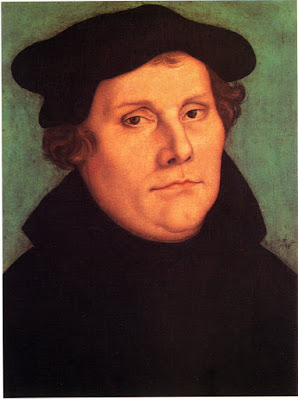
-Wir sein pettler. Hoc est verum.--"We are beggars. This is true."--Martin Luther-

_______________________________________________
[ Home ] [ Originals ] [ Words of Ones Wiser ] [ Odds and Ends ]
Showing posts with label Philosophy. Show all posts

Thursday, November 6, 2008

Umberto Eco on the Language of Being

This is from a book I just bought by Umberto Eco. I have been interested in the relation between language and the way in which we think. Especially the way in which we define and categorize our sense experience. A book on "Language and Cognition" seemed like the ticket. I had heard of Umberto Eco, though I didn't know much about him other than from a recommendation of a friend of mine who was reading his novel, The Name of the Rose. So far I am very impressed and intrigued. Though, having to know like five languages just to keep up with him is a little daunting (google is your savior!).
-
"[Being] may well be the horizon of every other evidence, but it becomes a philosophical problem only when we begin to talk about it, and it is precisely our talking about it that makes it ambiguous and polyvocal. The fact that this ambiguity can be reduced does not alter the fact that we become aware of it only through speech. As it is thinkable, being manifests itself to us right from the outset as an effect of language.
-
"The moment it appears before us, being arouses interpretation; the moment we can speak of it, it is already interpreted. There is no help for it. Not even Parmenides escaped this circle, despite his having labeled the onomata unreliable. But the onomata were fallacious names that we are led, prior to philosophical reflection, to give to that which becomes. But Parmenides was the first to express in words the invitation to recognize (and interpret) the many signs (semata) through which being arouses our discourse. And for being to exist, it is necessary to say as well as to think (DK 6)...
-
..."It might be objected that we say without contradiction that which appertains to the substance, a substance independent of our speaking about it. But up to what point? How do we talk about the substance? How can we say without contradiction that man is a rational animal, whereas saying that he is white or that he runs indicates only a transient accident and cannot therefore be the object of science? In the act of perception the active intellect abstracts the essense from the synolon ([composite of] matter + form), and therefore it seems that in the cognitive moment we immediately and effortlessly grasp the to ti en einai [the essence] (1028b 33.36), what being was and therefore stably is. But what can we say of the essence? All we can do is give its definition: "And defintion results from the necessity of its meaning something. Definition is the notion (logos) whose name (onoma) is the sign (semeion)" (1012a 22-24).
-
"Alas! We have irrepressible proof of the existence of the individuals, but we can say nothing about them, except by naming them through their essesnce, that is to say by genus and differentia (not therefore "this man" but "man"). The moment we enter the universe of essenses, we enter the universe of definitions, that is to say the universe of language that defines.
-
"We have few names and few definitions for an infinity of single things. Therefore recourse to the universal is not strength of thought but weakness of discourse. The problem is that man always talks in general while things are singular. Language names by blurring the irrepressible proof of the existing individual. And all attempted remedies will be vain: the reflexio ad phantasmata, reducing the concept to flatus vocis with respect to the individual as the sole intuitive datum, entrenching oneself behind the indexicals, proper names, and rigid designators...all panaceas. With the exception of a few cases (in which we might not even speak, but point a finger, whistle, seize an arm--but in those cases we are simply being and not alking about being), we are invariably already situated in the unviersal when we talk."
-
-Umberto Eco, Kant and the Platypus, trans. Alastair McEwen (New York: Harcourt, Inc., 1999), 22-23.

Tuesday, October 21, 2008

The Dark Reality of Sinful Humanity

Pastor Harrison over at Mercy Journeys has just posted an interesting reflection on Nietzche from a quote of his: "Perhaps I know best why it is man alone who laughs; he alone suffers so deeply that he had to invent laughter."

This is what pastor Harrison has to say:

"Nietzche understood the dark reality of sinful humanity like few others in history, and it drove him insane. Unfortunately this son of a pastor did not recognize the profound divine answer for the human predicament - Christ. Laughter is no human invention by the way, it's a divine gift. And its particularly delightful when its freed by grace to become a full, round belly laugh... above all at ourselves. MH

p.s. You have to appreciate N.'s world class mustache..."

This is what I have always appreciated about Continental secularism in comparison to American secularism. Europeans have an intimate understanding of what the real implications are if "God is dead." Unlike their American counterparts, Europeans don't mask the very dark reality that life takes on when one denies the existence of God. Americans are so inundated with materialism, capitalism, self-sufficiency, self-pleasure, sex, and any other god there might be, that they are oblivious of the complete meaninglessness of existence without God. At least Europeans don't hide it.

Wednesday, September 24, 2008

Self-Generation; Dependence and Independence Cont.

Rereading Oswald Bayer's Living By Faith: Justification and Sanctification, I was caught by this quote from Ernst Bloch's Principle of Hope.

I thought it captured well many of the points I made previously in my post Dependence and Independence.

Bloch was a Marxist philosopher who had a lot of influence on Jurgen Moltmann's Liberation Theology, and a lot of other anthropocentric theology. Concluding his massive three volume work, Principle of Hope, Bloch writes:

"Man everywhere is still living in prehistory, indeed all and everything still stands before the creation of the world, of a right world. True genesis is not at the beginning but at the end, and it starts to begin only when society and existence become radical, i.e. grasp their roots. But the root of history is the working, creating human being who reshapes and overhauls the given facts. Once he has grasped himself and established what is his, without expropriation and alienation, in real democracy, there arises in the world something which shines into the childhood of all and in which no one has yet been: homeland."

-Principle of Hope, vol. 3 (trans. Neville Plaice et al. Cambridge, MA: MIT Press, 1986), 1375-76.


Bayer mockingly critiques: "We homeless ones are moving out of our state of misery, out of a foreign land, and coming back home, coming back to paradise. This will be the result of our work, of our perfected cultural achievement" (17).
-
This quote from Bloch really exemplifies the character of man's claimed "independence." Lets walk through this quote step by step...
-
"Man everywhere is still living in prehistory, indeed all and everything still stands before the creation of the world, of a right world. True genesis is not at the beginning but at the end, and it starts to begin only when society and existence become radical, i.e. grasp their roots."
- Can you say "gnostic"!? Notice the role of creator that man takes on when he claims independence from God, creation, history, society, and human nature.
-
"But the root of history is the working, creating human being who reshapes and overhauls the given facts."
- Creating by reshaping and overhauling the given facts? Does this make any sense? This is what I had to say in my previous post: "They cannot claim that they achieved these [personal achievements] independent of any factors. Quite literally, to be independent means to be able to create ex nihilo, you need to be able to create something out of nothing, we would need to be God!" I made the point that the more one tries to exert supremacy over, in the attempt to be "independent of," the more he shows himself to be dependent on, what Bloch calls, "the given facts." You can rearrange, reshape, or overhaul the "given facts" all you want, but in the end they're still the "given facts." Or to adopt the recently controversial political phrase: "You can put lipstick on a pig, but it is still a pig." (I had to!)
-
"Once he has grasped himself and established what is his, without expropriation and alienation, in real democracy, there arises in the world something which shines into the childhood of all and in which no one has yet been: homeland."
- While my previous post was focused on "personal independence," notice the very characteristic Marxist "communal independence" that Bloch proposes. The concept I want to focus on is the grasping, the establishing what is mine. In my previous post, I give an analogy of a power-playing King who tries to express his independence from, by exerting over. I state that the very attempt at independence is what makes him a slave: "The reason that he is a slave is because he took, he grasped (ala the fruit). And the harder he squeezes to continue to hold on to this dream of independence, the more the things that he is dependent on weigh in on him."
-
I will leave you with my previous conclusion:
-
"The answer to the contradiction is not to take (as in the fruit, or in the case of the king), but to receive, that is, entering God back into the equation, to recognize what God has given us, to thankfully receive this, and to joyfully go out and care for those things God have given us dominion over...We are dependent, it is true, but we are dependent on a God who promises to clothe, feed and sustain us, and finally bring us home."

Tuesday, September 23, 2008

Zizek On the Confusion of Law and Gospel...


Who knew that an atheistic, Lacanian, Marxist could properly distinguish between law and gospel? :)

On the other hand, he makes a good point (not only against post-modernism) that Lutherans, if they're not careful, can fall into. That is, the thought that if we talk nicely, or don't enforce but leave it up to choice, or talk of, say, love of neighbor with flowery, happy language, we are therefore preaching the gospel. Silly Evangelicals! Read Walther...

For further amusement opportunities see the rest of this interview. The guy interviewing him has no idea what he's talking about; very funny. hehehe.

Why Do We (Really) Believe?


This post is an expansion on some of the arguments I started in my previous post: Witness, Apologetics, and the Law and Gospel. With these posts I want to start painting a picture of how reason and faith should be related within a Lutheran context.

In my previous post I stated that the use of apologetics in a witnessing situation is essentially an aspect of the law. As such it is not a function that creates and builds up faith (the gospel) but rather it brings to task the fallen reasoning of man and his accusations against God on the basis of reason (the law).

In this post I want to address the question: "Why do we really believe?"

As Lutherans we should be wary of the work of many modern Christian philosophers in the area of the justification of belief. Both your evidentialists and your reformed epistemologists have completely discarded the work of the Word and the Holy Spirit in the formation of faith, the result of which is the propagation of Arminian thought and the robbing of comfort to many Christians.
-
First off, hopefully with little argumentation, I want to be allowed to disregard the position of reformed epistemology. The foundationalist's argument that belief in God is essentially beyond criticism is absurd. Yes, I am pulling the absurdity card...lets leave it at that.
-
But, beyond the absurdity of their argument, reformed epistemology poses many difficulties for those who desire to uphold a Lutheran understanding of man and the reception of faith. Their argument, in some form or another, presupposes that there is an inherent nature in man that is drawn to belief in God or a god, and not only this, faith itself, thus making it "properly basic." This flies in the face of our well established understanding of anthropology. Lutherans believe that there is nothing inherent in man that can be inclined towards belief in God (not to mention the problem of the complete lack of special revelation). The only thing that is "properly basic," to misuse their terminology, for natural man, is sin; no "God shaped hole" (at least from fallen man's perspective). They have completely disregarded the need for the hearing of the gospel (Rom. 10:14) and the essential role of the Holy Spirit in the reception of faith (1 Cor. 12:3).
-
Evidentialists, to a lesser or greater degree, would claim that evidence is needed to hold a justified belief. If the evidence is not there, one's belief is irrational, and thus not justified. Under evidentialism one would say that one's reason is able to come upon a justified belief in God. While some may say that the Holy Spirit is also needed, this argumentation is merely semi-pelagian or synergeistic in character. Being that most evidentialist arguments for God's existence come from a natural theology this also does not leave the room for special revelation (specifically Scripture and Jesus' ministry) which is needed for the reception of faith (Rom. 10:14). They also, generally, do not hold that the ministry of the Holy Spirit is evidence on which to base belief. These are positions that are in complete disagreement with the words we confess:
-
"I believe that I cannot by my own reason or strength believe in Jesus Christ, my Lord, or come to Him; but the Holy Ghost has called me by the Gospel, enlightened me with His gifts, sanctified and kept me in the true faith; even as He calls, gathers, enlightens, and sanctifies the whole Christian Church on earth, and keeps it with Jesus Christ in the one true faith."
-
Here is the distinction that needs to be made: My ability to defend my faith with reason, apologetics, logic, and evidence, is not why I believe.
-
Quite literally, I can defend what I believe, but I can't explain to you why I believe it (at least not in a way that would convince you to believe). This is the clear testimony of Scripture: "For the Word of the cross is foolishness to those being lost, but to us being saved, it is the power of God" (1 Cor. 1:18); "For since in the wisdom of God the world by wisdom did not know God, God was pleased through the foolishness of preaching to save the ones believing" (1 Cor. 1:21). It is really an example of the theologia crucis: "We, on the other hand, preach Christ crucified (truly an offense to Jews, and foolishness to Greeks)" (1 Cor 1:23). Paul is not afraid to admit the absurdity of God coming to earth to be placed on a cross. This is because Paul knows the real power behind what he is preaching, that is, the Holy Spirit. It is behind the "Word of the cross," behind the "foolishness of preaching," it is behind preaching "Christ crucified" that the Holy Spirit works in the hearts of men.
-
Now, this is not to say that reason, logic, apologetics, etc. are not useful. There is a great need for these things. I will draw on some of my previous points in Witness, Apologetics, and the Law and Gospel.
-
These things are needed or useful for the following reasons:
-
1) The current state of, especially western, society is one where there are major obstacles to the promotion of the gospel. The hundreds of years worth of using reason, science, psychoanalysis, anthropology, "you name it," to discount the claims of faith are deeply entrenched in our culture and are a major road block for many people to come to faith. As such, reason or apologetics should serve the purpose in tearing down, under the proper functioning of the law (see previous post), the state of the flesh and the work of the devil that prevents the work of the Spirit through the gospel.
-
2) Reason, apologetics, etc. can help Christians, not as that on which to base their faith, but rather by fighting against the attacks of Satan and the flesh which cry in our heart: "Is it true that God has said, You shall not eat from any tree of the garden?" (Gen. 3:1).
-
As with any function of the law, reason is there to prepare for the work of the gospel.
-
But reason, enslaved in this age to the regnum mundi (as Gerhard Ebeling would argue; see previous post), can never be the grounds for why I believe. If reason were pure (that is, without the taint of sin) we might be able to defend belief in God, but this age makes pure reason an impossibility. The arguments hurled against faith, the foolishness of the cross, the flesh that is inclined toward unbelief, and the reality of the lies of Satan leave reason as shaky ground to base one's faith.
-
To express the Lutheran teaching on faith correctly, we must be led to say: "Though I can defend what I believe, this is not why I believe." On this is solid ground, in that, our subjectivity is traded for Christ's objectivity. It is through the work of the Holy Spirit working through Word and Sacrament on which I base my faith. It is such words as: "You are forgiven," "Given and shed for you," and the foolish "Word of the cross" that truly contain the "power of God." This is why we (whether we like it or not!) believe.
-
P.S. The first to explain the reference in the picture of the Great Pumpkin gets a gold star!!!

Monday, September 22, 2008

Zizek Being Zizek


This is a recent Q&A with continental philosopher Slavoj Zizek. I don't know why, but I can't help liking the guy. Take it lightheartedly and with a grain of salt; enjoy.

When were you happiest?
A few times when I looked forward to a happy moment or remembered it - never when it was happening.

What is your greatest fear?
To awaken after death - that's why I want to be burned immediately.

What is your earliest memory?
My mother naked. Disgusting.

Which living person do you most admire, and why?
Jean-Bertrand Aristide, the twice-deposed president of Haiti. He is a model of what can be done for the people even in a desperate situation.

What is the trait you most deplore in yourself?
Indifference to the plights of others.

What is the trait you most deplore in others?
Their sleazy readiness to offer me help when I don't need or want it.

What was your most embarrassing moment?
Standing naked in front of a woman before making love.

Aside from a property, what's the most expensive thing you've bought?
The new German edition of the collected works of Hegel.

What is your most treasured possession?
See the previous answer.

What makes you depressed?
Seeing stupid people happy.

What do you most dislike about your appearance?
That it makes me appear the way I really am.

What is your most unappealing habit?
The ridiculously excessive tics of my hands while I talk.

What would be your fancy dress costume of choice?
A mask of myself on my face, so people would think I am not myself but someone pretending to be me.

What is your guiltiest pleasure?
Watching embarrassingly pathetic movies such as The Sound Of Music.

What do you owe your parents?
Nothing, I hope. I didn't spend a minute bemoaning their death.

To whom would you most like to say sorry, and why?
To my sons, for not being a good enough father.

What does love feel like?
Like a great misfortune, a monstrous parasite, a permanent state of emergency that ruins all small pleasures.

What or who is the love of your life?
Philosophy. I secretly think reality exists so we can speculate about it.

What is your favourite smell?
Nature in decay, like rotten trees.

Have you ever said 'I love you' and not meant it?
All the time. When I really love someone, I can only show it by making aggressive and bad-taste remarks.

Which living person do you most despise, and why?
Medical doctors who assist torturers.

What is the worst job you've done?
Teaching. I hate students, they are (as all people) mostly stupid and boring.

What has been your biggest disappointment?
What Alain Badiou calls the 'obscure disaster' of the 20th century: the catastrophic failure of communism.

If you could edit your past, what would you change?
My birth. I agree with Sophocles: the greatest luck is not to have been born - but, as the joke goes on, very few people succeed in it.

If you could go back in time, where would you go?
To Germany in the early 19th century, to follow a university course by Hegel.

How do you relax?
Listening again and again to Wagner.

How often do you have sex?
It depends what one means by sex. If it's the usual masturbation with a living partner, I try not to have it at all.

What is the closest you've come to death?
When I had a mild heart attack. I started to hate my body: it refused to do its duty to serve me blindly.

What single thing would improve the quality of your life?
To avoid senility.

What do you consider your greatest achievement?
The chapters where I develop what I think is a good interpretation of Hegel.

What is the most important lesson life has taught you?
That life is a stupid, meaningless thing that has nothing to teach you.

Tell us a secret.
Communism will win.